

Ursula Palla
Pale Light
20 November 2026 — 28 February 2027


Press Preview
Wednesday, 18 November 2026, 10:30 a.m.
Opening
Thursday, 19 November 2026, 7 p.m.
Artist Talk
Friday, 20 November 202 2026, 2 p.m.
After-Work-Tour
Thursday, 10 December 2026 and 25 February 2027, at 6 p.m.
Exhibition Duration
20 November 2026 – 28 February 2027
Tue – Sun, 10-18 Uhr
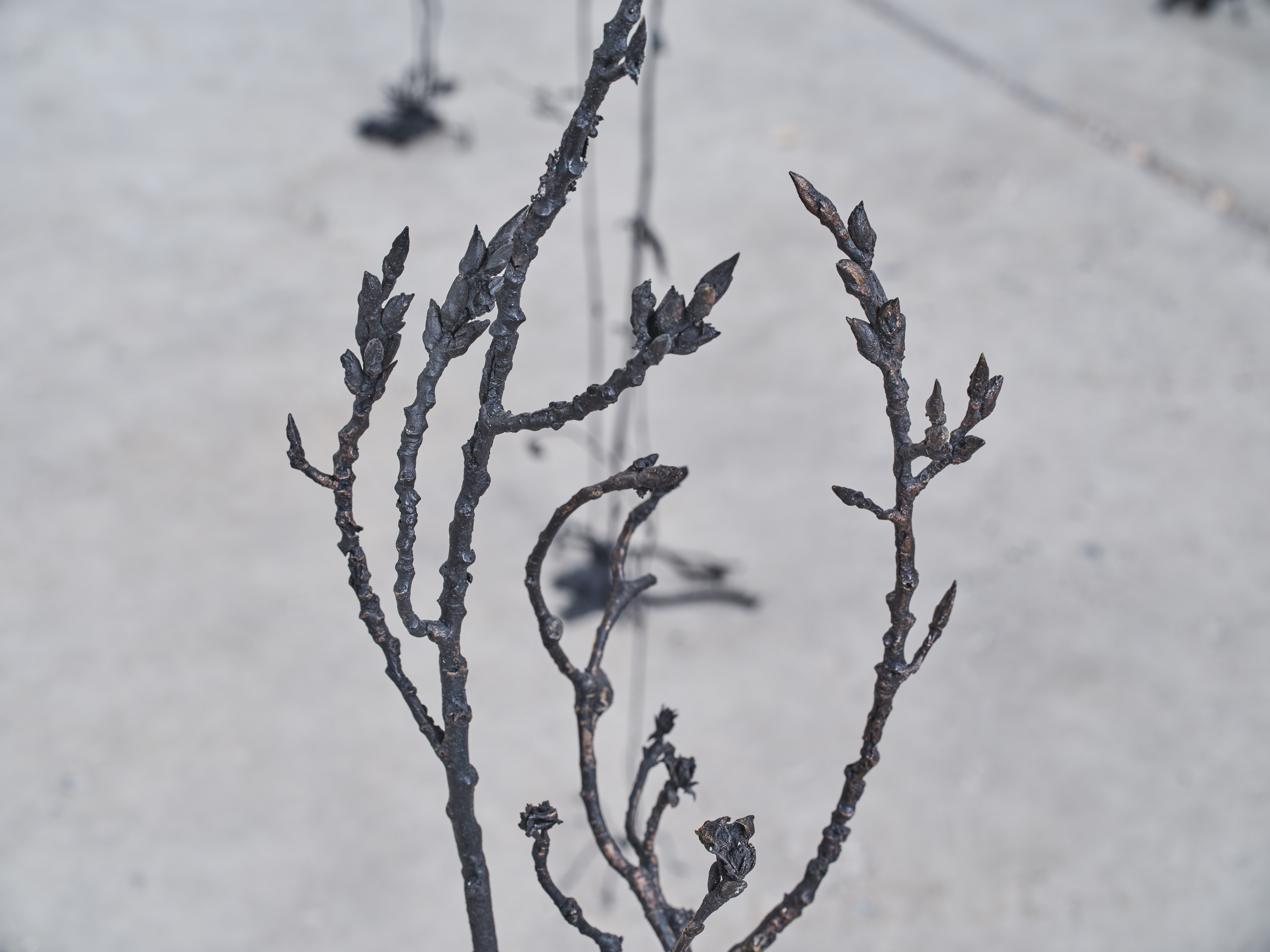
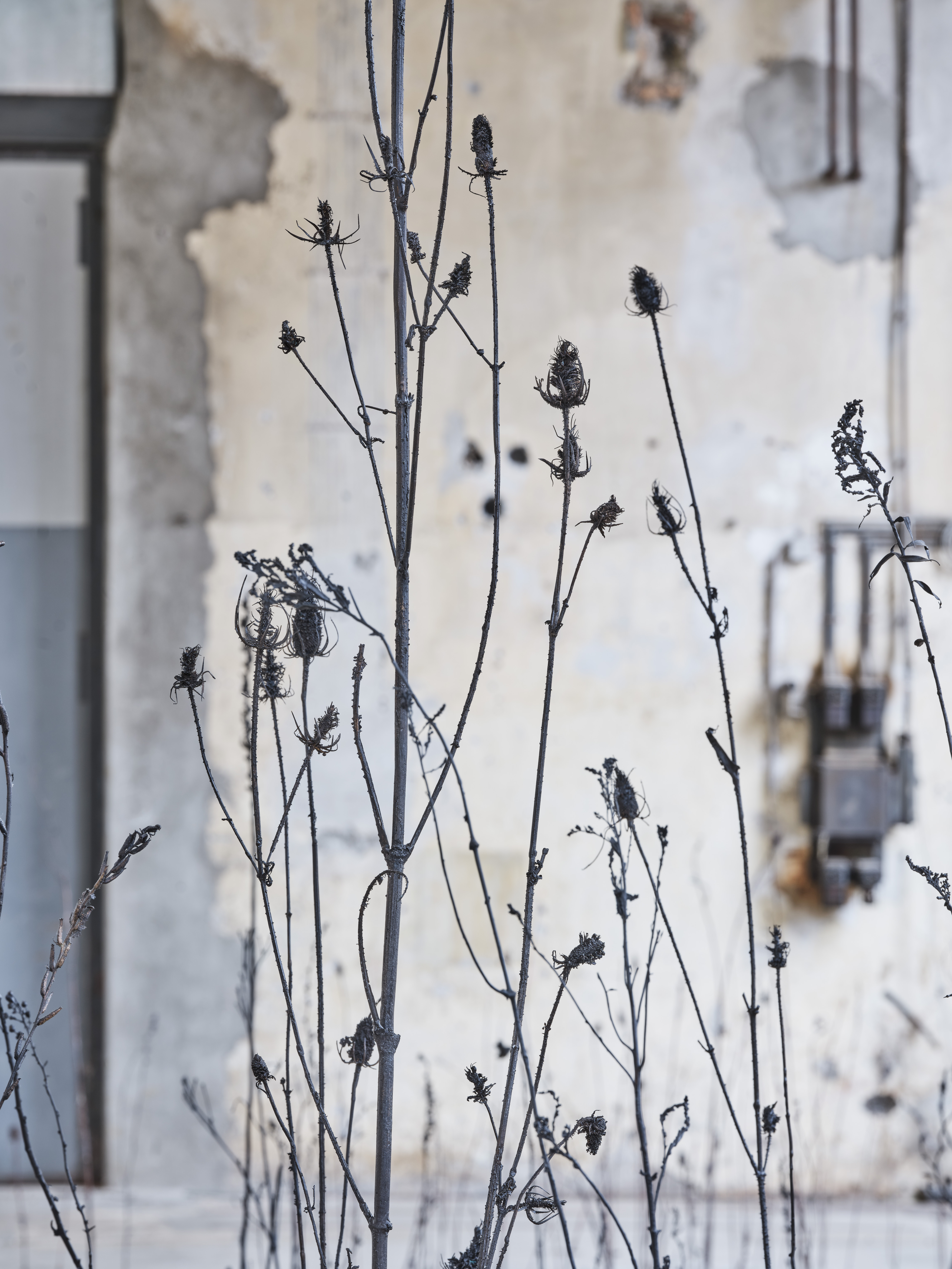
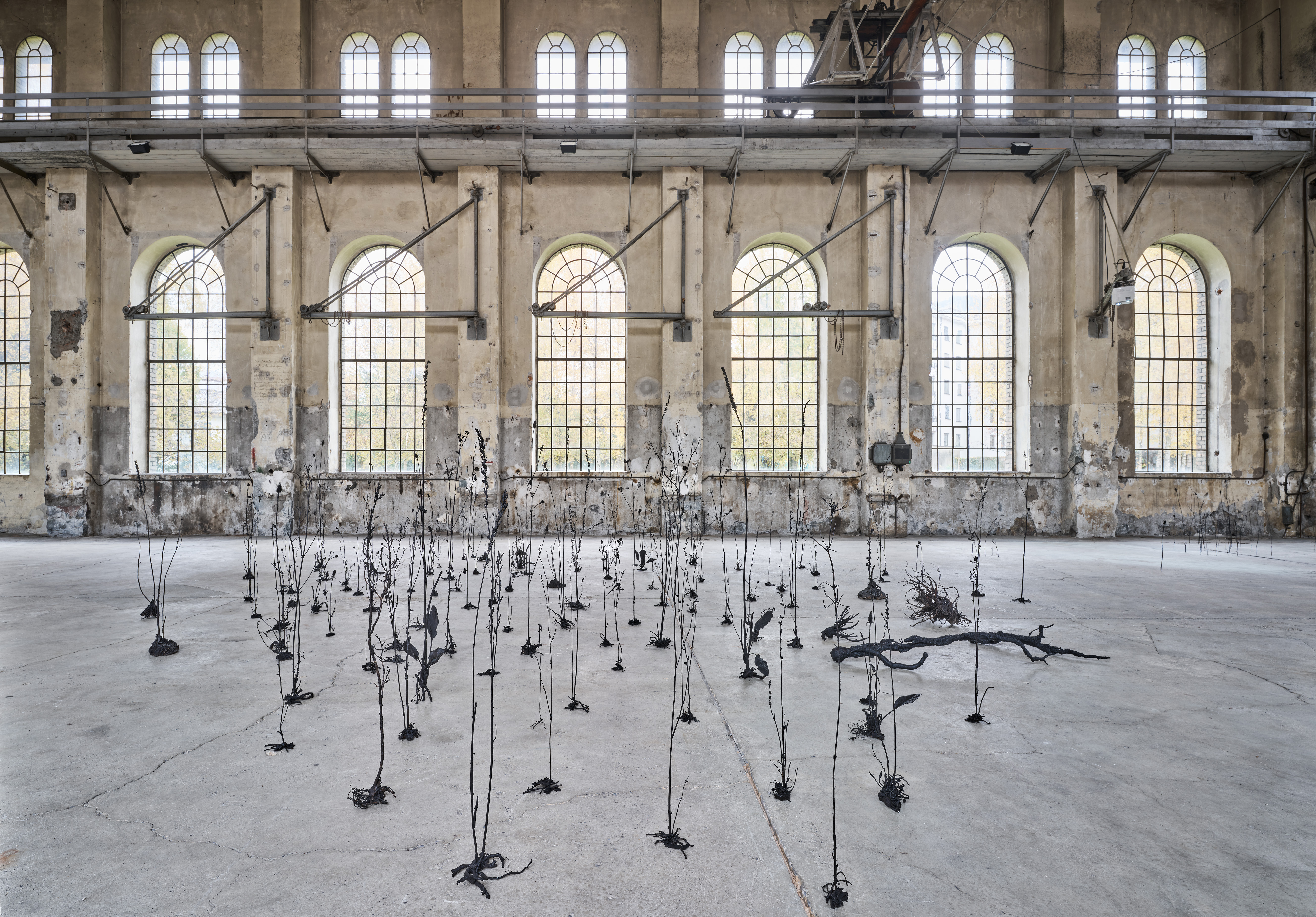
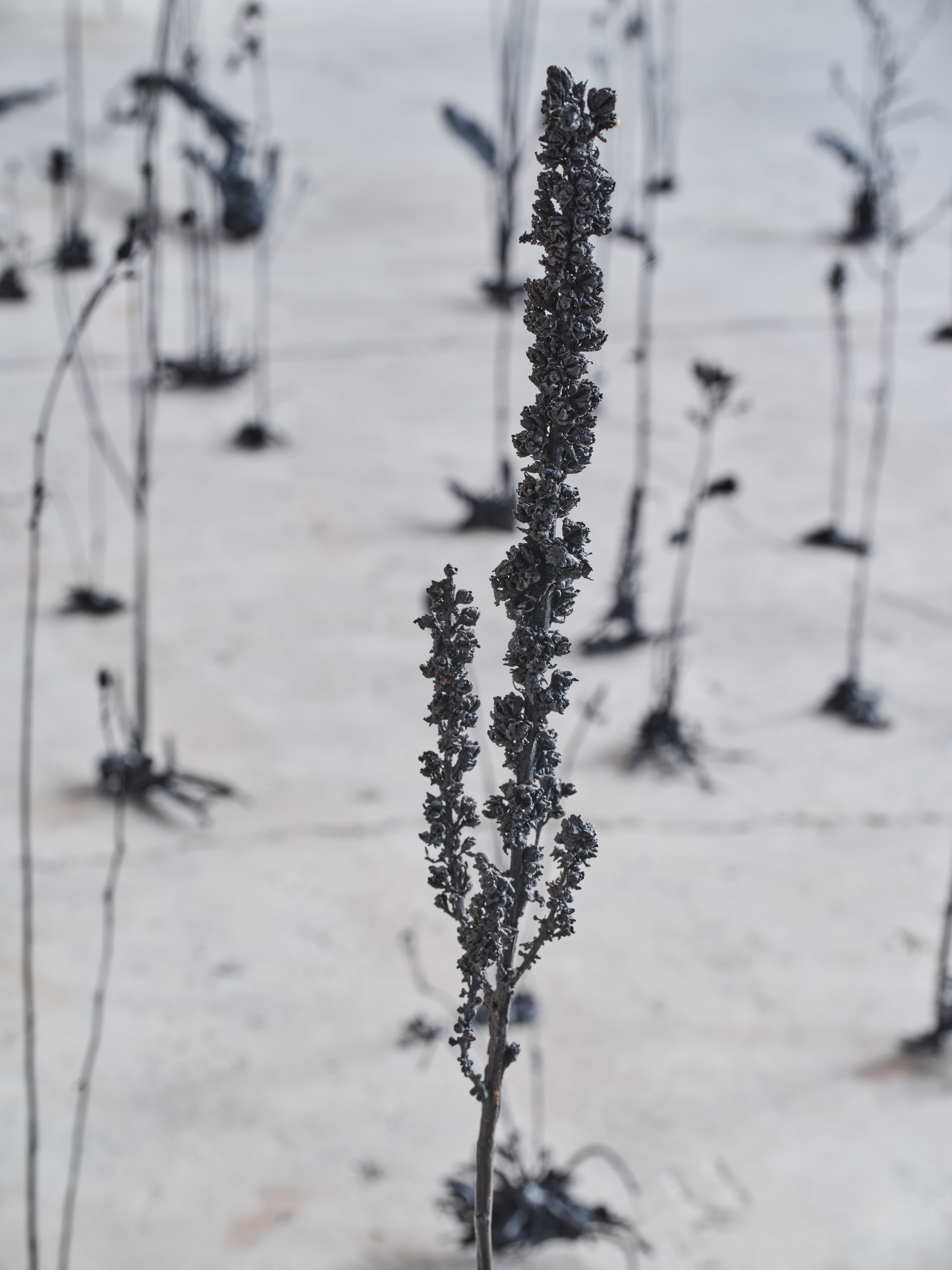
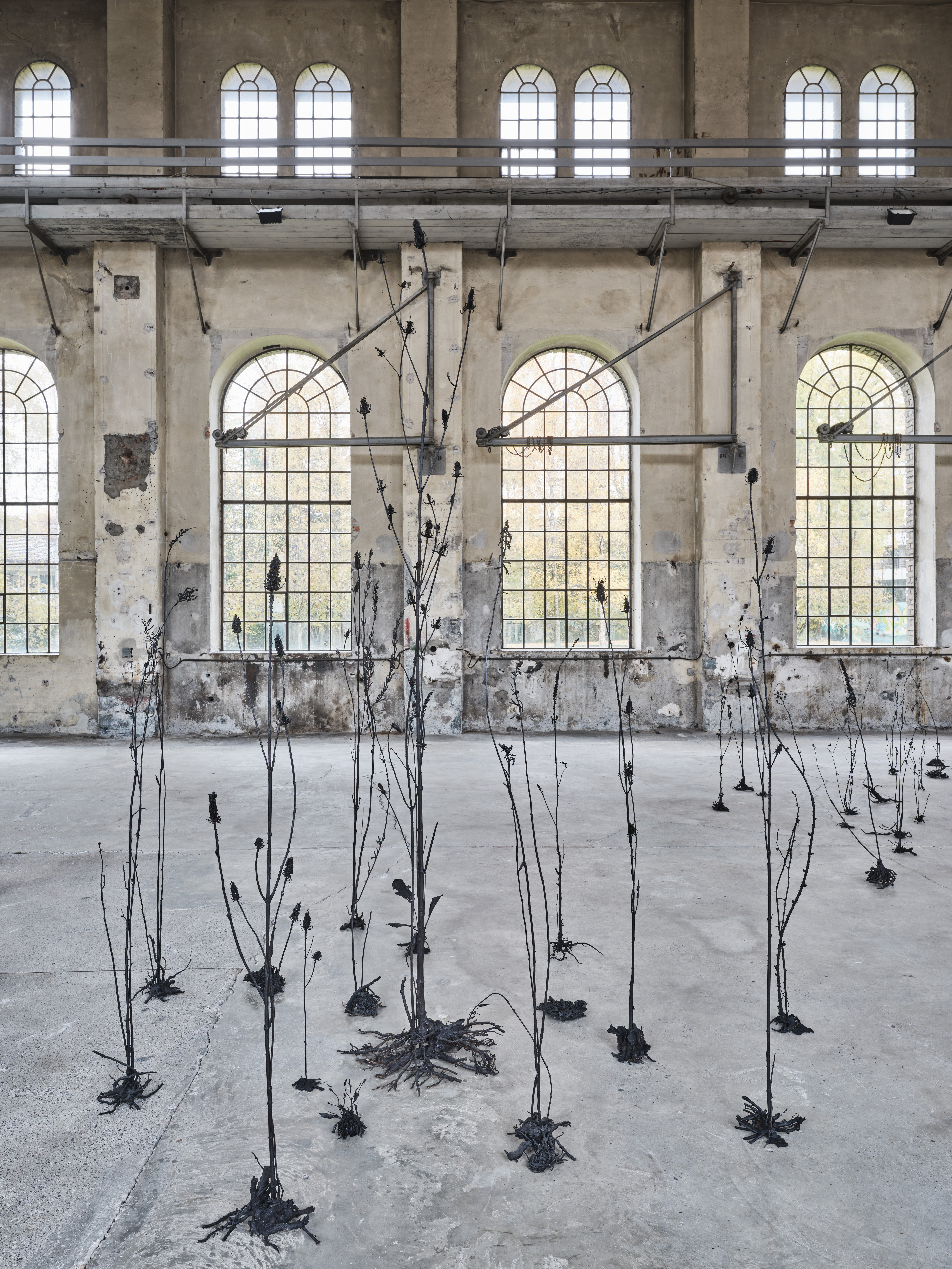
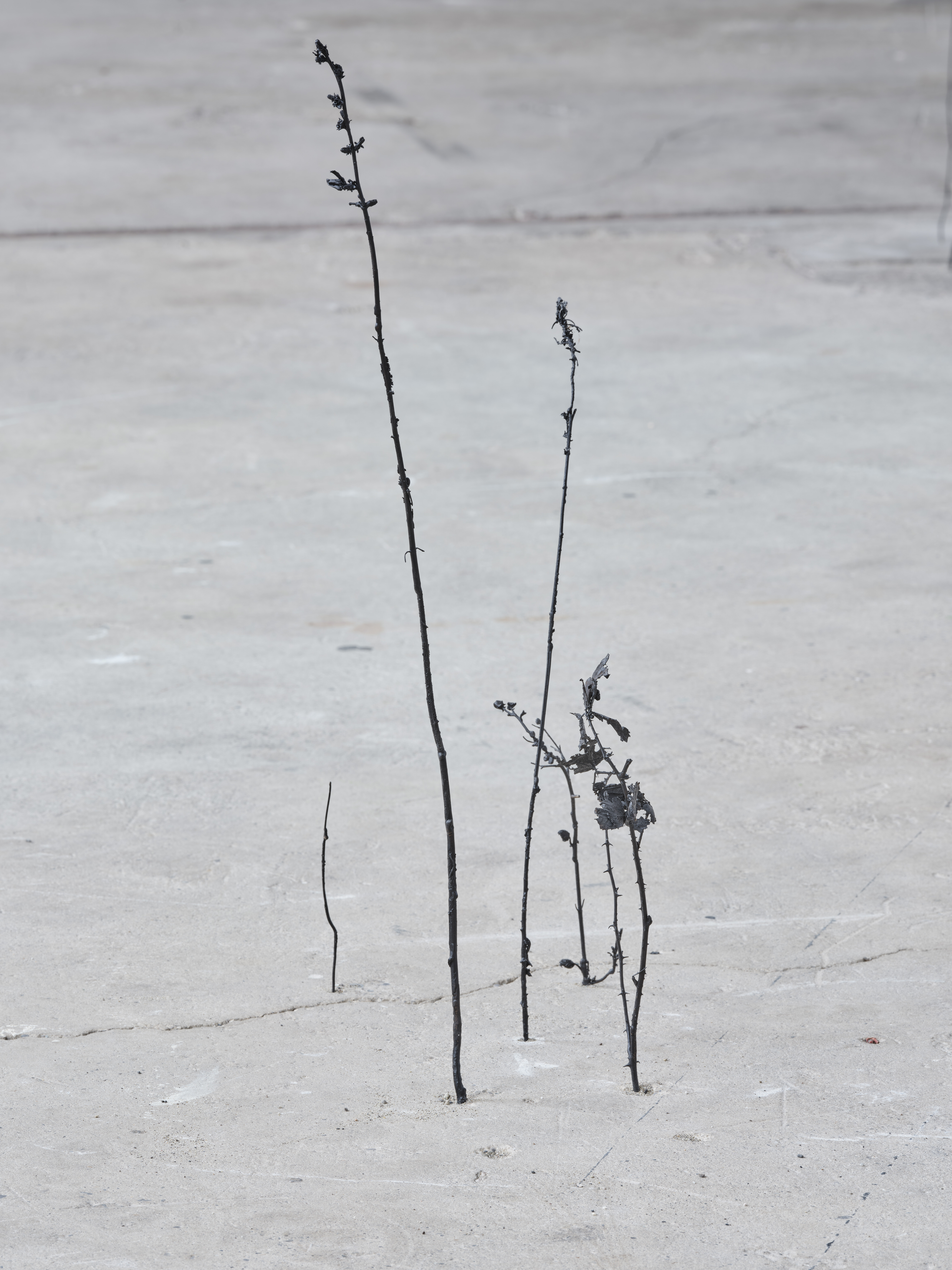
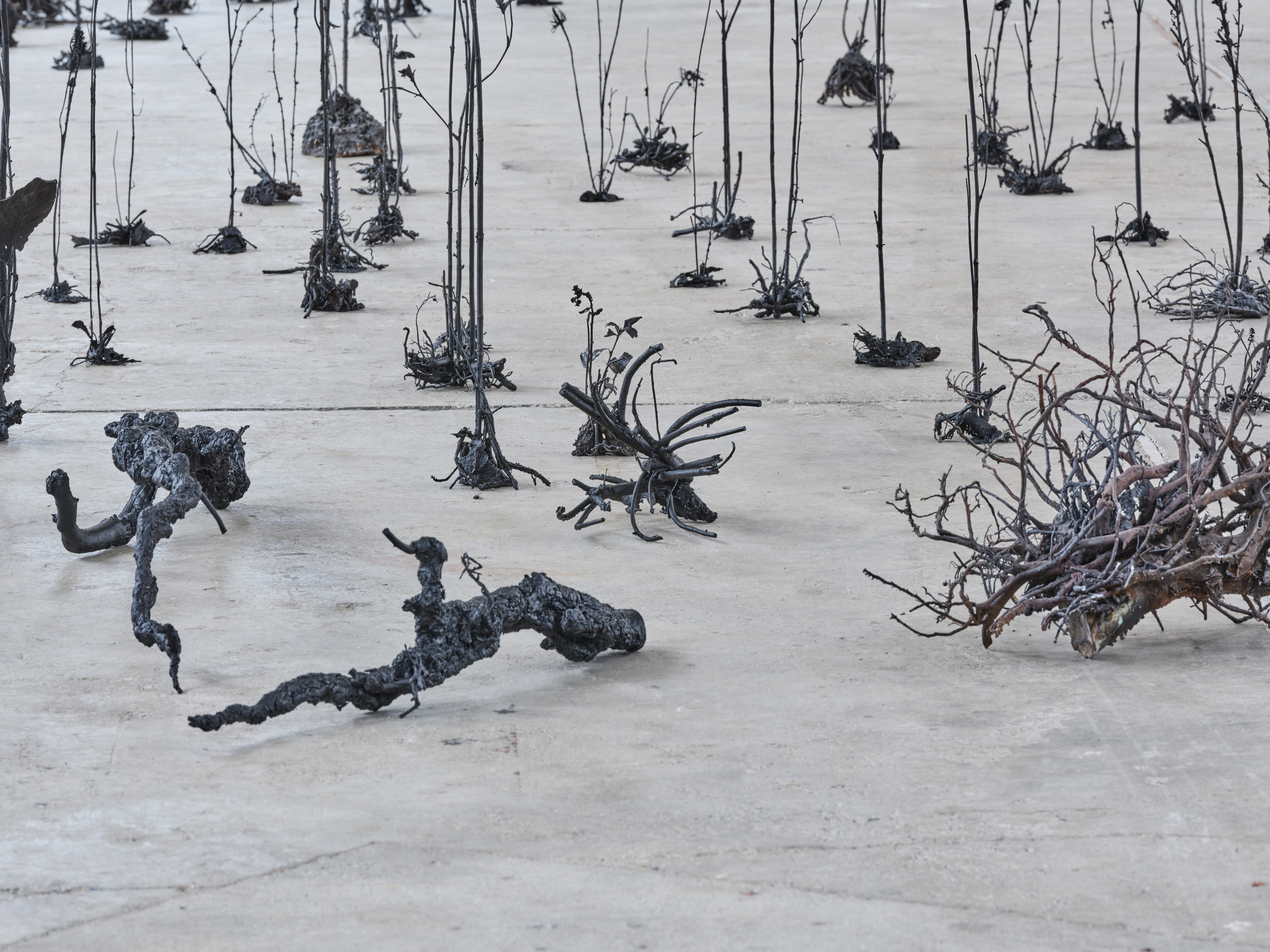
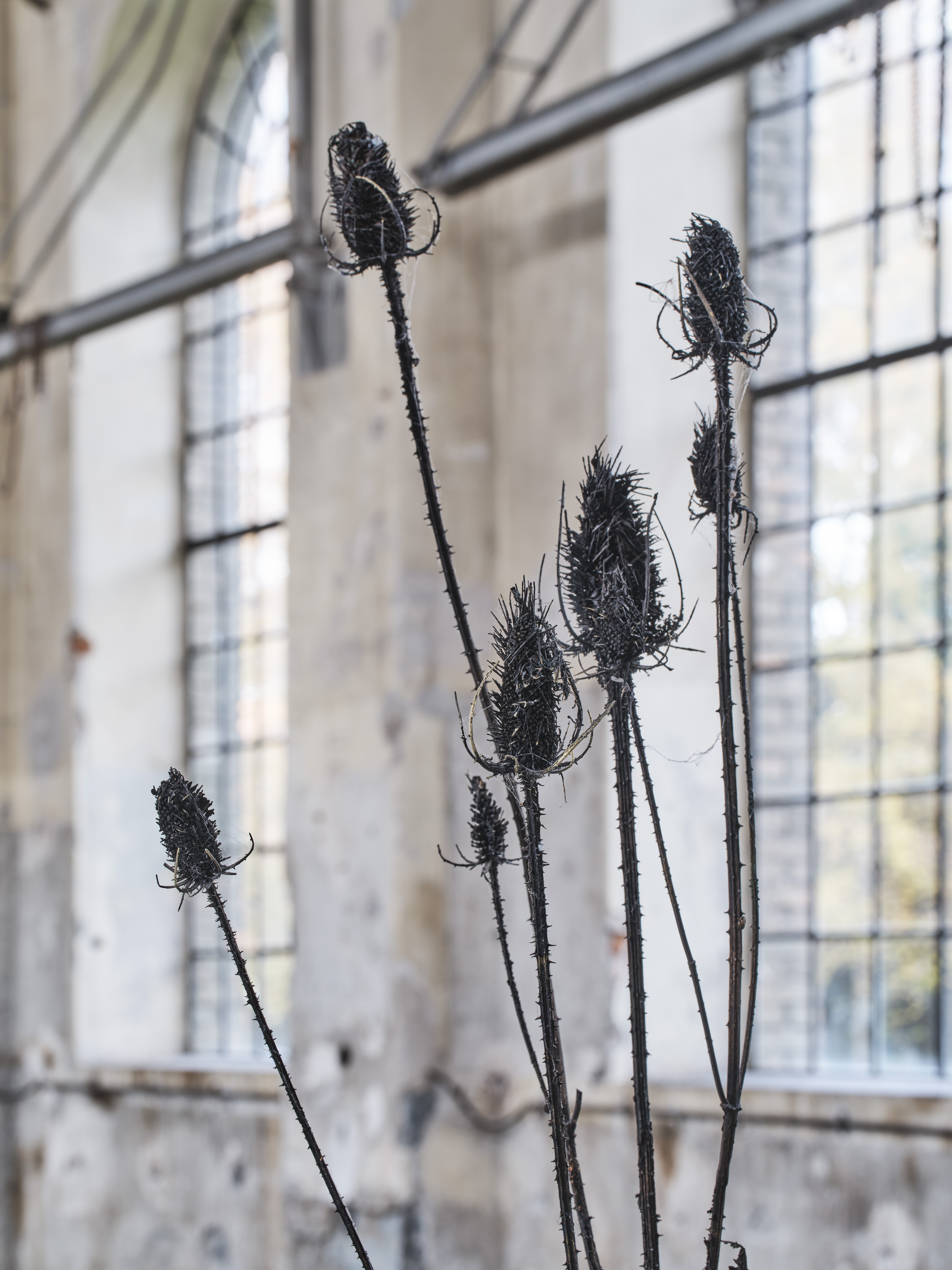
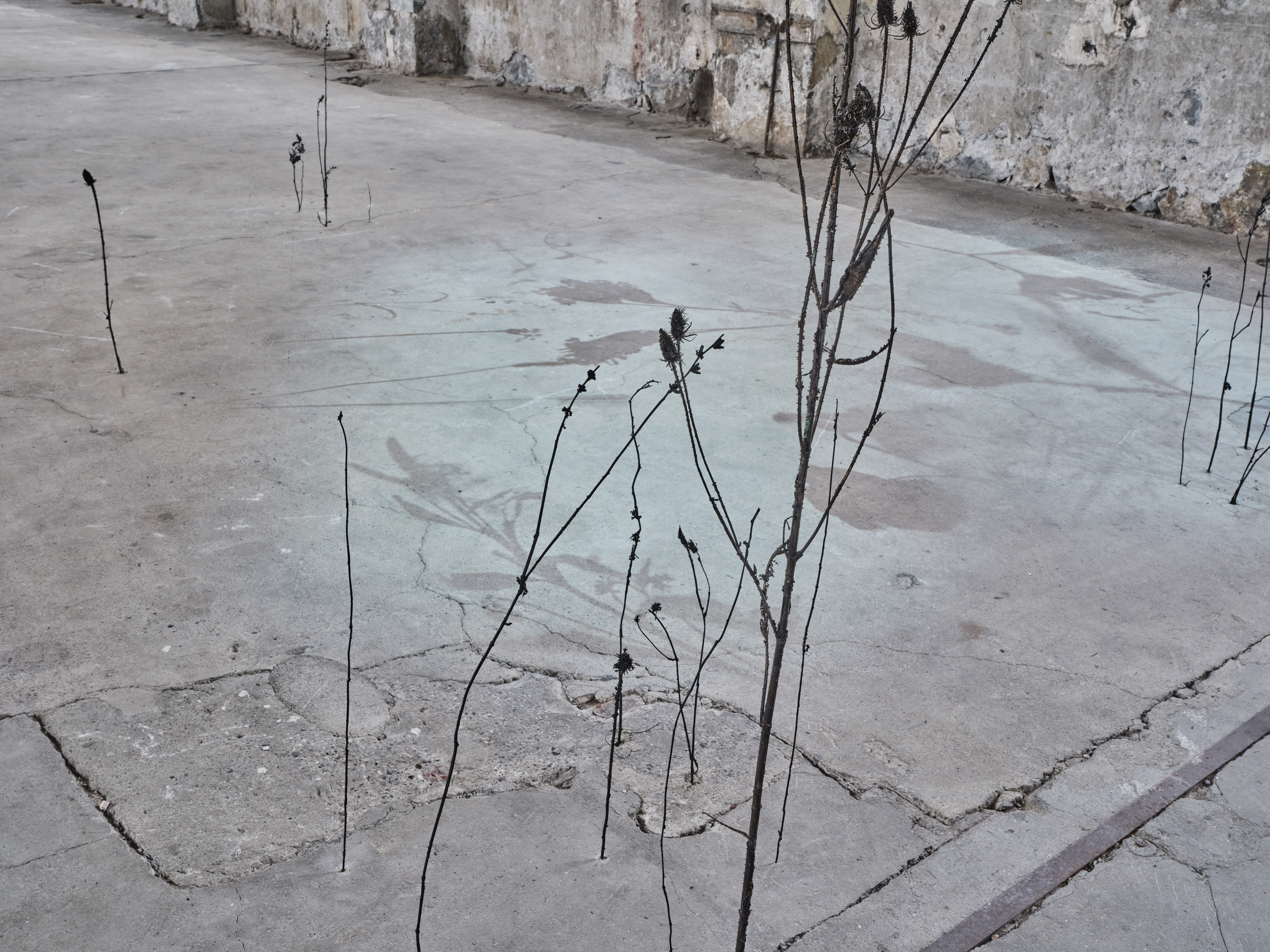
Maverick vegetation takes possession of Kunstraum Dornbirn. Dark stalks, leaves, and blossoms, some scarcely knee-high, others looming larger than life, sprout within the remains of the former industrial architecture. Rootstocks stand upon the concrete floor as if violently torn from the earth; elsewhere, stalks appear to emerge directly from the ground itself. What at first appears to be a barren landscape, threatened by decay, proves upon closer inspection to be permanent and weighty: the plants are cast in bronze, each one unique. Every detail, leaf vein, and thorn is visible. It is not to splendid blooms or botanical rarities that Palla raises this sculptural monument. Instead she honours the so-called weeds, the wild flora, and the resilient pioneer or medicinal plants that grow at the fringes of our awareness – displaced and removed, or thriving precisely where other plants find no basis for life. In “Pale Light”, they become the protagonists of an imaginary landscape.
In this exhibition, Palla brings together for the first time the series of works that she created over several years – “Empty Garden 1” (2018–2019), “Empty Garden 3” (2019–2022), “Fireweeds” (2022–2024) and “Botanical Notes – Hortus Medicus” (2023/2024) – with her new video work “Reblooming” (2026) to create a large-scale, immersive installation. She thus develops a dense interweaving of sculpture, moving images, light and shadow
Palla’s point of departure lies in a fundamental enquiry that has long characterised her work: her practice places humanity at the centre, with all its actions, aspirations, errors and the traces it leaves behind in the world. She focuses on our multifaceted relationship with the environment and our responsibility within this interplay of existences. Palla perceives the bond between humankind and the environment not merely through an ecological lens, but equally within the transitions from the natural to the artificial, and the manipulation of our own perception. In this context, she is particularly drawn to those often overlooked moments that reveal just how fragile the equilibrium between humanity and nature truly is, and how swiftly it may be disrupted.
The ‘weed’ serves as a remarkably precise entry point. Its very name describes less a botanical category than a human value judgement. How do we construct nature? What is permitted to grow, and what must give way? Which plant is cultivated, and which torn out? What concept of nature emerges when humanity decides what is desirable within a garden, a landscape or an ecosystem?
These questions find a concrete art-historical resonance in “Empty Garden 3”. The series had its inception during Palla’s visit to Claude Monet’s famous garden in Giverny. With its Impressionist riot of colour, the carefully cultivated site stands as a paradigm of a wildness that is the result of continuous selection and design. In winter, this profusion subsides, and the grounds resemble fallow fields. In January 2013, Palla observed how native wild plants briefly returned to this controlled terrain. Inspired by these plants, she cast their likenesses in bronze. That which was rendered invisible returns, and the supposedly worthless is imbued, through one of the medium’s most traditional materials, with a permanence that translates its persistent return into sculptural presence.
This reveals Palla’s intuitive dialogue with materials, spaces and histories. Material is not merely a vehicle for form, but moreover an integral part of its narrative. Transformation becomes an artistic process that encompasses shifts in perception and meaning as well physical changes. We experienced this with particular vividness in the “Fireweeds” series. Rosebay willowherb is a pioneer plant that colonises clearings and wasteland, spreading with remarkable speed after forest fires: hence its common Canadian name, ‘fireweed’. In Germany, the plant is also known as the ‘rubble flower’ (Trümmerblume), as it was the first to bloom amidst the ruins of the Second World War. Palla casts her willowherbs in a distinct alloy of bronze and weapon steel. Embedded within this new material is the history of destruction, yet our gaze is simultaneously directed towards that which is emerging: ‘The sculptures transform weapons into plants, turning against destruction and violence to become a metaphor for that which is flourishing and yet to come.’
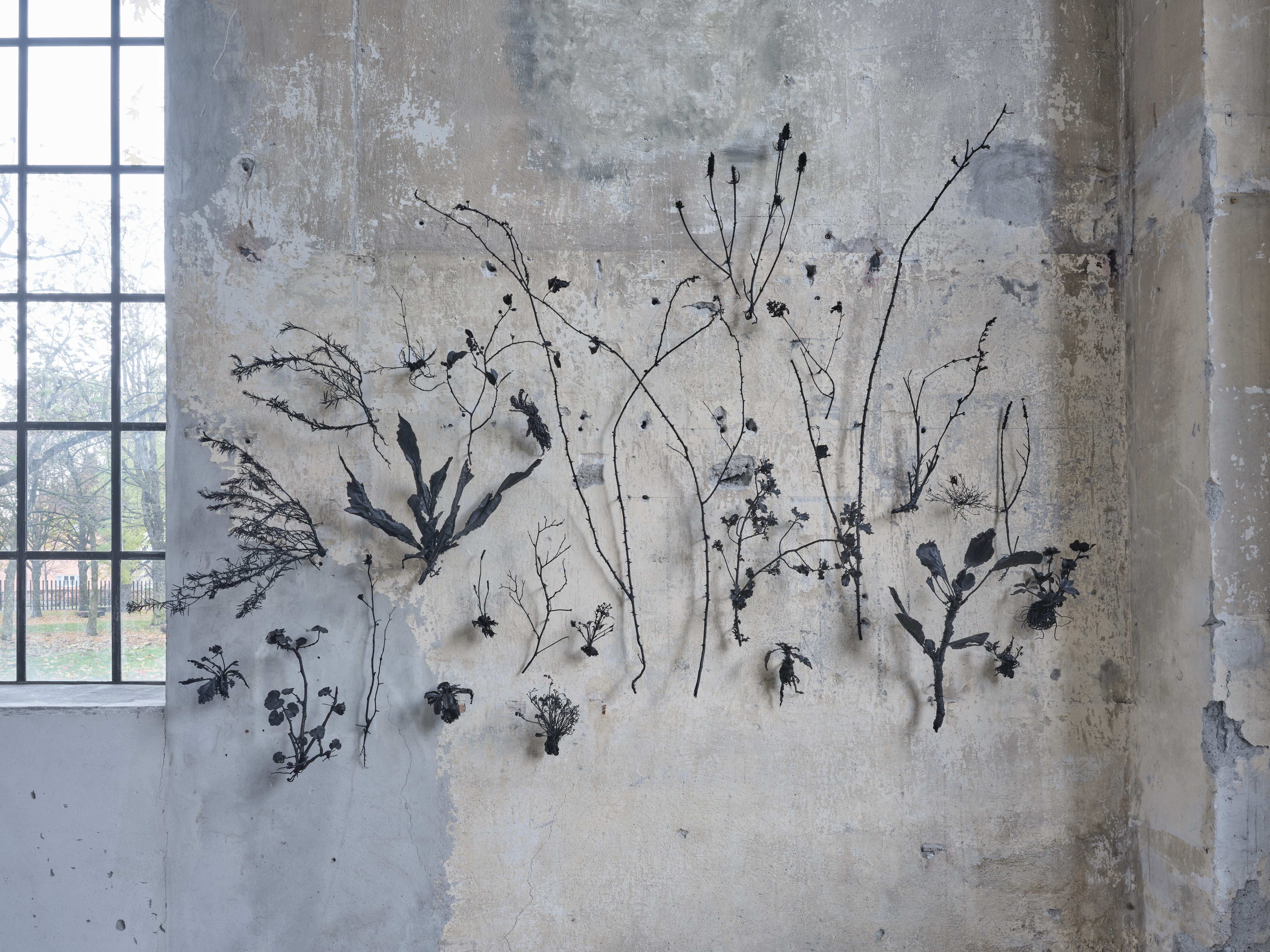
For Palla, research and the assimilation of knowledge are inextricably linked with artistic thought: ecological interrelations, scientific findings and historical sources form the foundation of her aesthetic decisions and narrative threads. In the series “Botanical Notes – Hortus Medicus”, she turns her attention to medicinal plants and the hortus medicus, a horticultural form that systematically organises and preserves medical and botanical knowledge. This tradition ranges from medieval monastery gardens through the teaching gardens of the early modern period up to the present day. In Palla’s work, the collection comes together to form an imaginary global apothecary. Biodiversity thus appears not merely as an ecological factor but also as a living archive: worldwide, around 50,000 plant species are used medicinally, up to 15,000 of which are estimated to be endangered species. Wild medicinal herbs in particular constitute a vital reservoir of genetic diversity and could provide the raw materials for future medicines.
With “Reblooming”, the recurrent motif of disappearance assumes an immaterial form. Wild plants threatened with extinction appear as shadow projections on the floor, where they mingle with the real shadows cast by the plant castings. Body and image, presence and absence, merge into one another. At this point, the exhibition title “Pale Light” invites a potential interpretation: during the winter months, muted daylight filters through the large windows of the historic assembly hall, altering the appearance of the landscape over the course of the day. At the same time, the artificial light of the projections allows endangered plants to return as fleeting images. The pale light becomes an intermediate state: it brings into view, while simultaneously harbouring the possibility of disappearance.
Thus the exhibition “Pale Light” speaks of a nature that is anything but static. Habitats dwindle, biodiversity is lost and natural rhythms falter. But Palla does not train her gaze exclusively upon what has been lost. Her pioneer plants bear within themselves the potential for a new beginning: they grow on destroyed, scorched or fallow land, establishing the conditions under which other life can follow. In this landscape, threat and persistence, absence and return, destruction and regeneration exist side by side.
Herein lies the poetic quality of Palla’s work. It does not merely illustrate ecological interrelations, nor does it confine itself to a warning against their loss. Rather, Palla translates the knowledge that underpins her work into situations that we can experience through the senses. Within the monumental industrial architecture of Kunstraum Dornbirn, a landscape thus unfolds whose protagonists are precisely those inconspicuous plants which repeatedly elude human control. The natural and the artificial are as inseparable from one another as destruction and new beginnings. Palla’s work moves within these transitions: between nature and artefact, loss and return, destruction and regeneration. Out of this ambivalence, Palla develops an open space for reflection: not as an idealised image of an untouched nature to which we might return, but as an enquiry into what forms of coexistence with nature will remain possible in the future.
Ursula Palla, born in Chur in 1961, lives and works in Zurich. For 30 years, her work has been featured in numerous exhibitions and video festivals in Switzerland and abroad. Her major solo exhibitions include ‘Like a Garden’ at Kunst(Zeug) Haus Rapperswil-Jona (2022), ‘Nowhereland’ at the Kunstmuseum Graubünden (2022), ‘Black Flowers’ at the Kunstmuseum Bern (2017), ‘Die fünfte Jahreszeit’ at the Museum Langmatt Baden (2013) and ‘Strange Paradise’ at the Bündner Kunstmuseum Chur (2008).
Curator: Thomas Häusle, Text: Sina Wagner
The publication accompanying Ursula Palla’s exhibition “Pale Light” is supported by the Boner Stiftung für Kunst und Kultur, the Kanton Graubünden, the Ernst und Olga Gubler-Hablützel Stiftung and the Stiftung Erna und Curt Burgauer.
You can download the press release here.
Reproduction conditions
The press photos are available for download further down on this page.
Please download the image credits and reproduction terms here.
The image files are available to you in the context of announcing and reporting on the exhibition “Pale Light” by Ursula Palla at Kunstraum Dornbirn (20 November 2026 – 28 February 2027). Reproductions must be accompanied by the name of the artist, the title and date of the work, the copyright and, where indicated, the name of the photographer. Please note here the specifications accompanying the respective caption. Reproductions may not be cropped, overprinted, toned or treated derogatively in any way, or used for marketing or promotional purposes without prior permission from the copyright holder. Please don’t hesitate to contact us if you have any questions regarding the context, usage or content of the images: Sina Wagner, sina.wagner@kunstraumdornbirn.at.