Michail Pirgelis
HYLE
3 July — 8 November 2026


Press Preview
Wednesday, 1 July 2026, 10:30 a.m.
Opening
Thursday, 2 July 2026, 7 p.m.
Artist Talk
Friday, 3 July 2026, 2 p.m.
After-Work-Tour
Thursday, 30 July and 24 September 2026, at 6 p.m. on both dates
ORF Lange Nacht der Museen – Long Night of Museums
Saturday, 3 October 2026, 6 pm–midnight
Exhibition duration
3 July – 8 November 2026
Tue – Sun, 10 a.m. – 6 p.m.
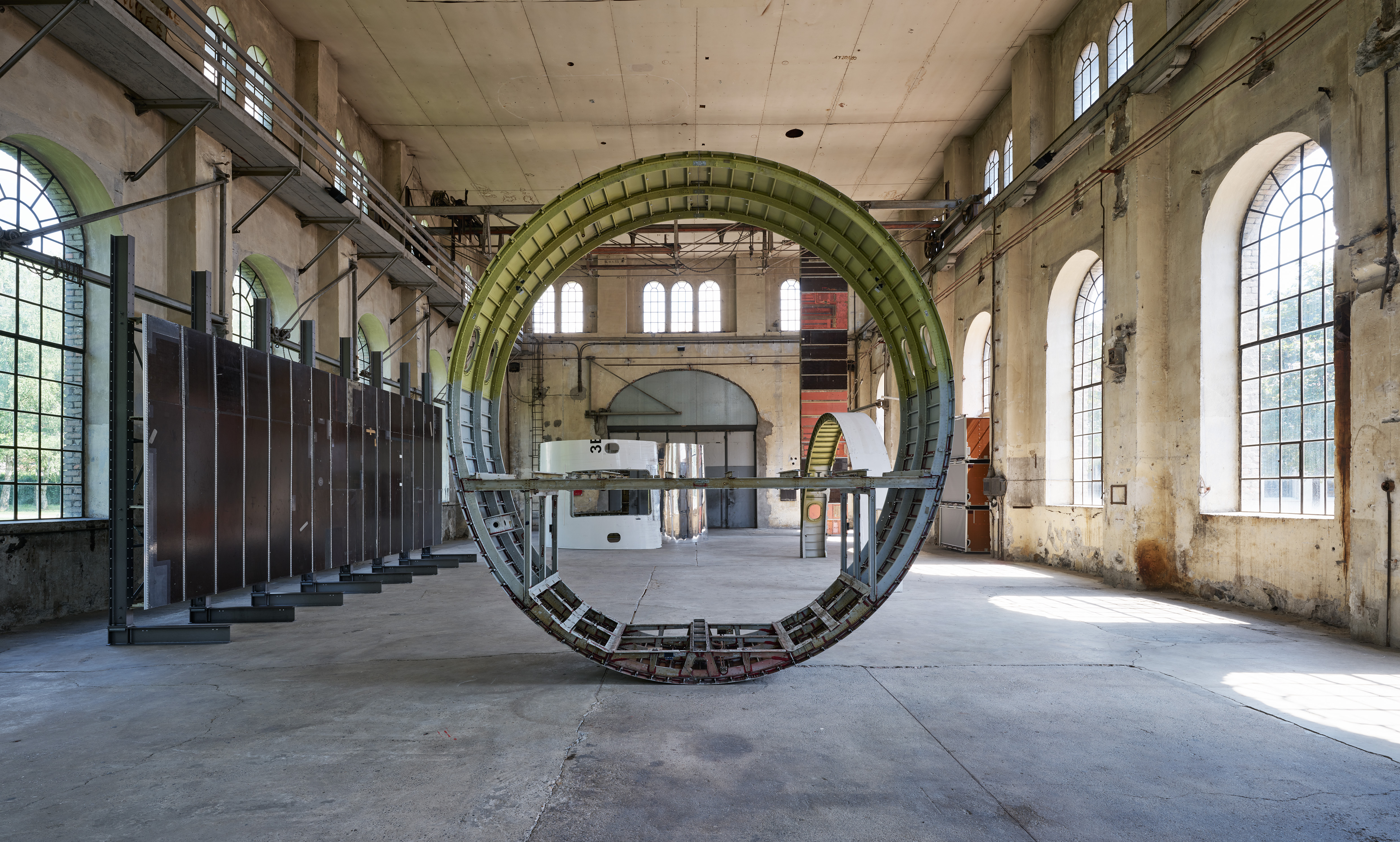
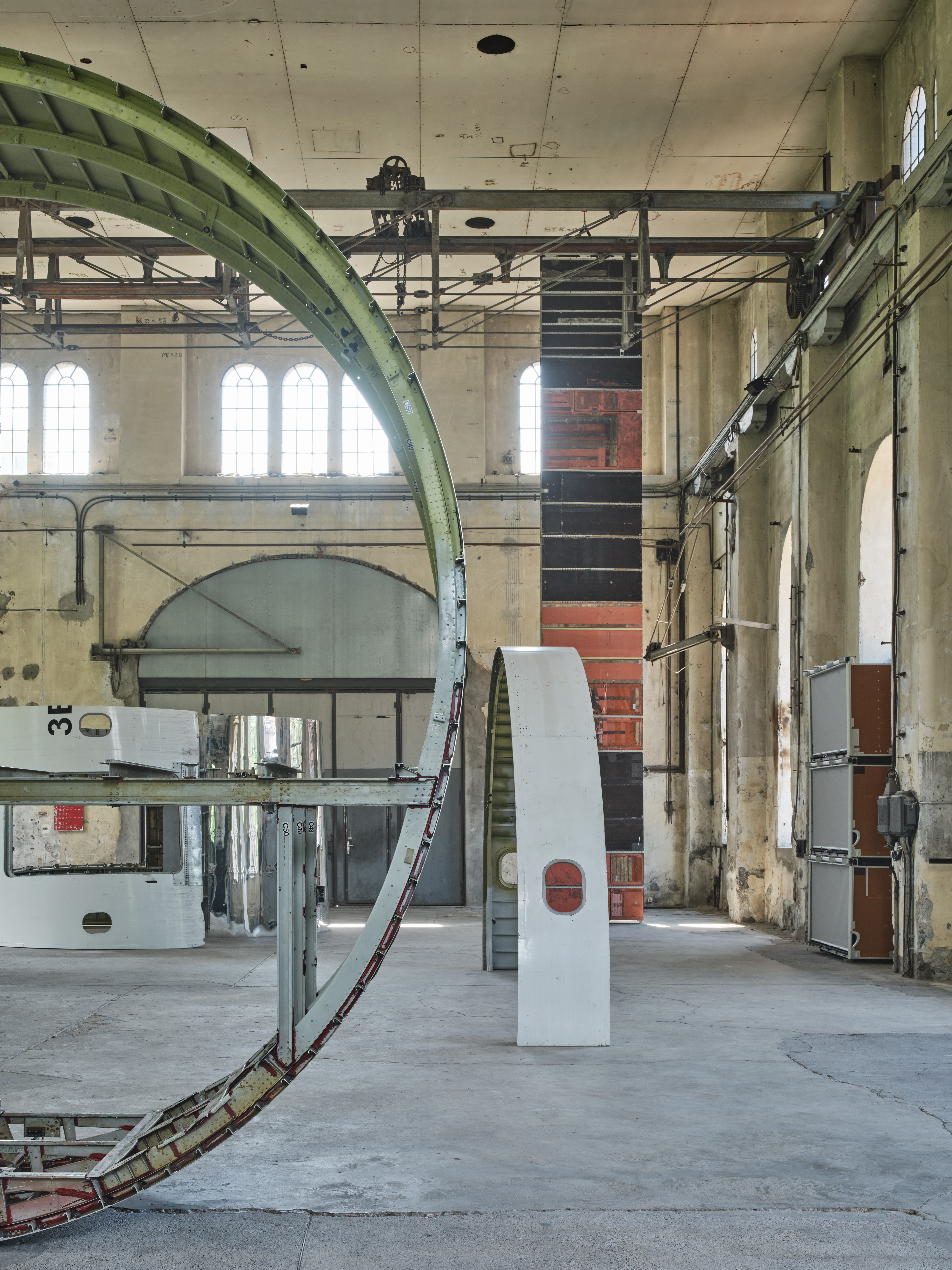
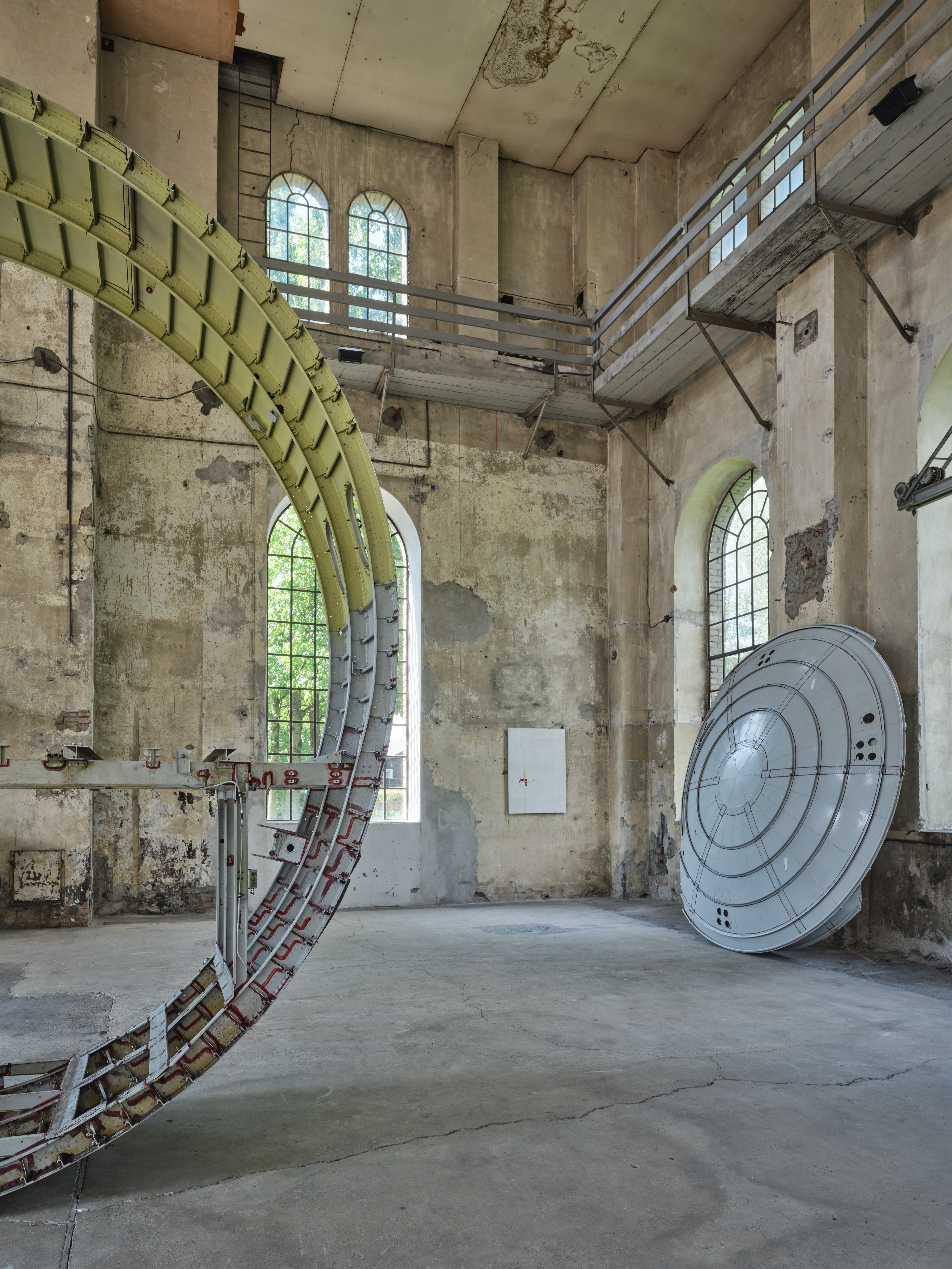
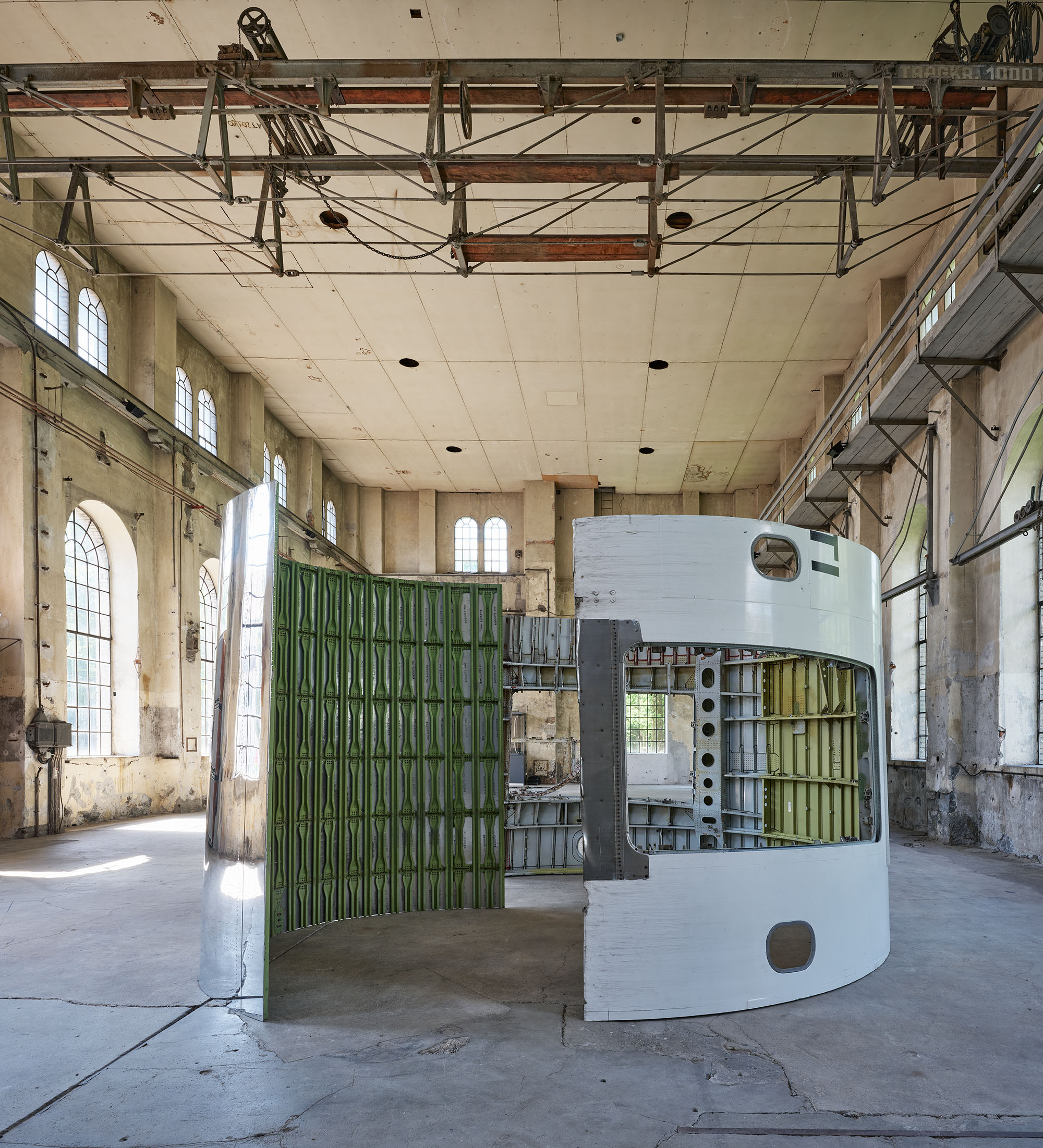
With HYLE, Kunstraum Dornbirn presents the first institutional solo exhibition in Austria by Michail Pirgelis. For the historic assembly hall, Pirgelis–born in Essen in 1976, raised in Greece, and now based in Cologne–has developed a large-scale installation. Here, monumental works are brought into dialogue with the unique spatial conditions of the venue—an arrangement that can simultaneously be read as a statement regarding the very concept of sculpture. HYLE places the question of sculpture’s essence at its centre, exploring material, form, and the process of their fusion.
Hyle (ὕλη), the Greek word for matter and raw material, denotes the as yet unformed, shapeless mass. In Aristotle’s philosophy, the term reveals its full philosophical depth: hyle is always conceived in relation to morphe (μορφή), shape, form, appearance. Matter and form are mutually dependent; neither exists without the other. It is only within this relationship that hyle becomes the principle of form-taking, the potential awaiting shaping. For Pirgelis, this is not an abstract construct, but a precise description of his own practice and its conceptual core.
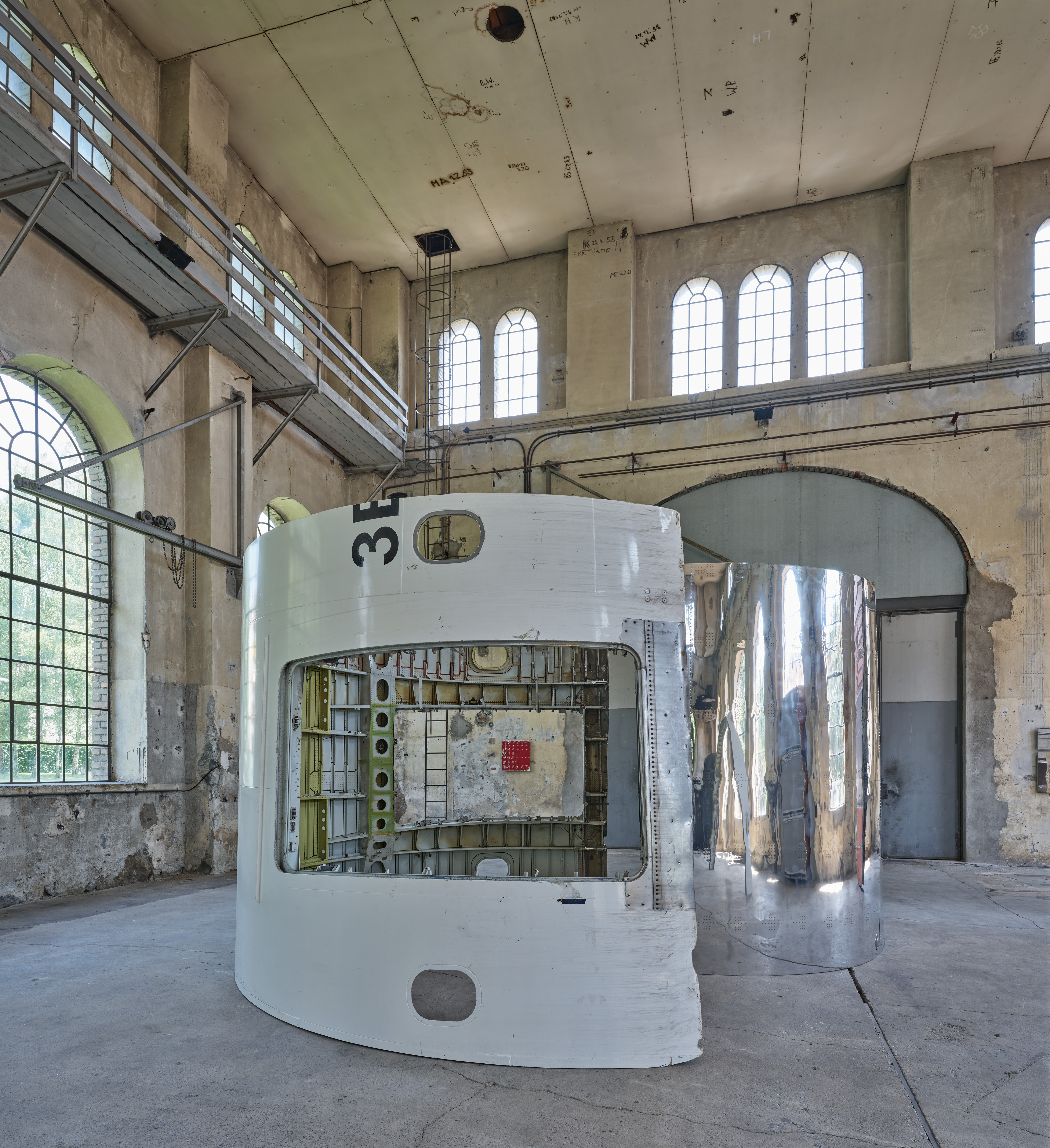
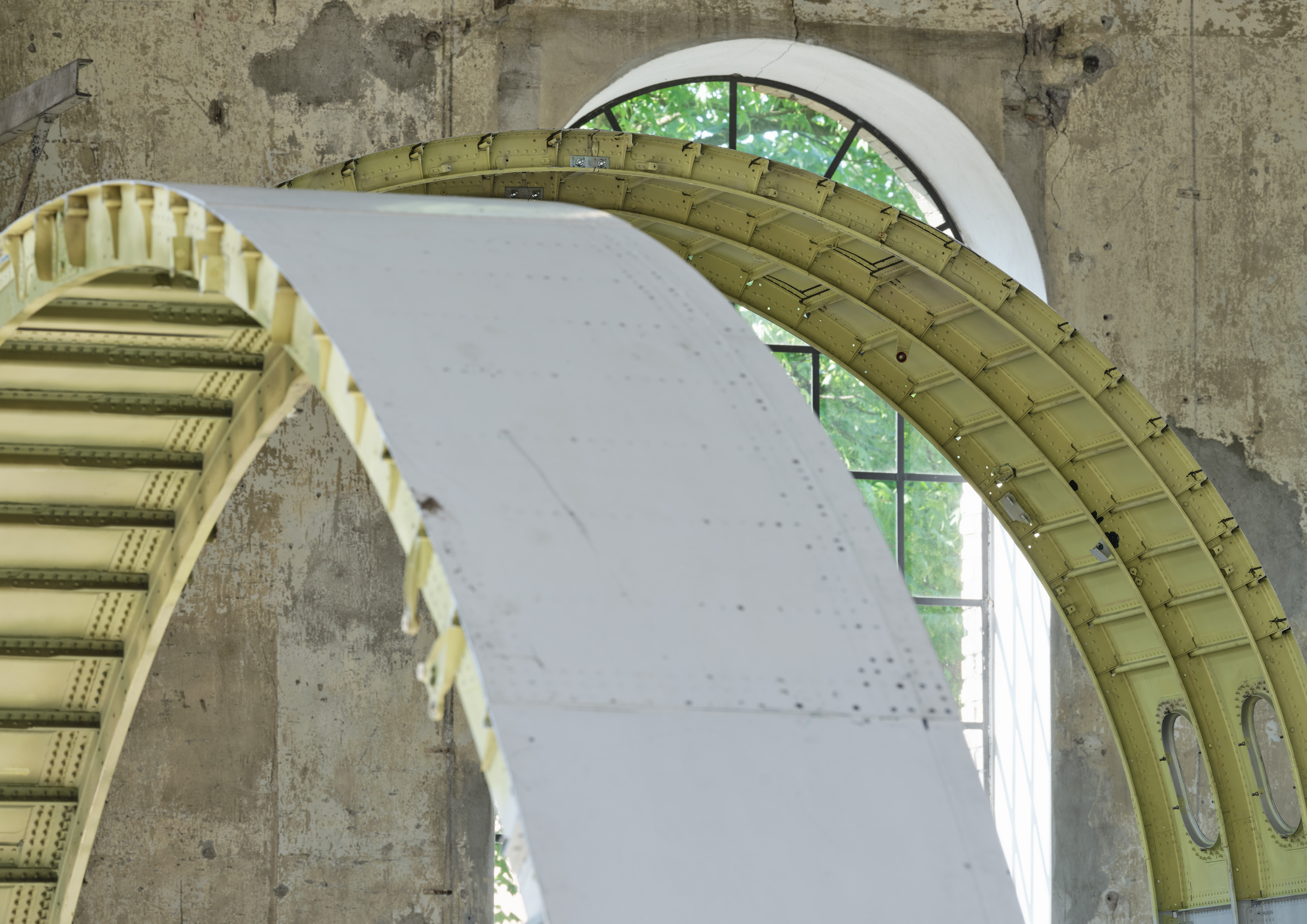
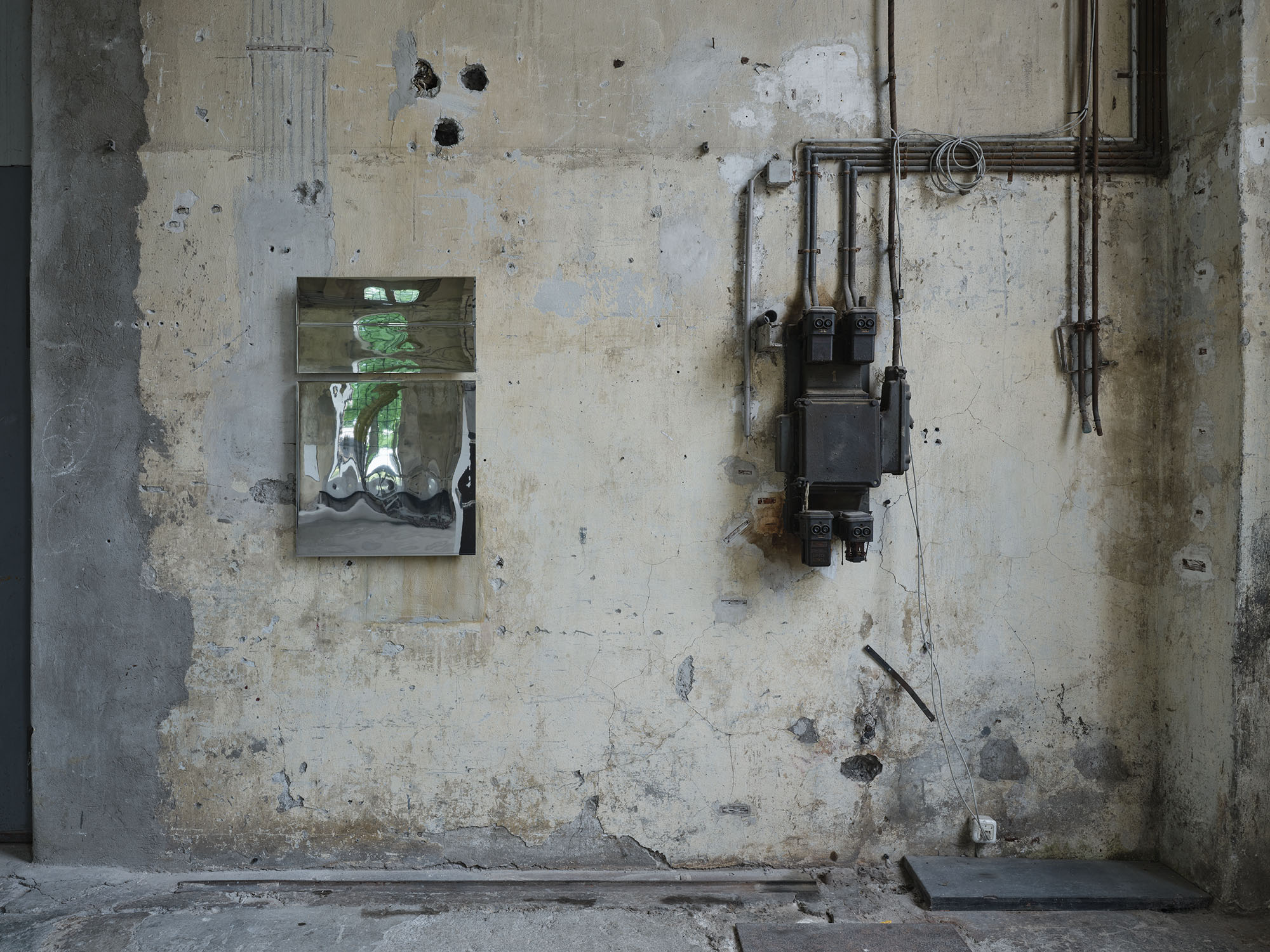
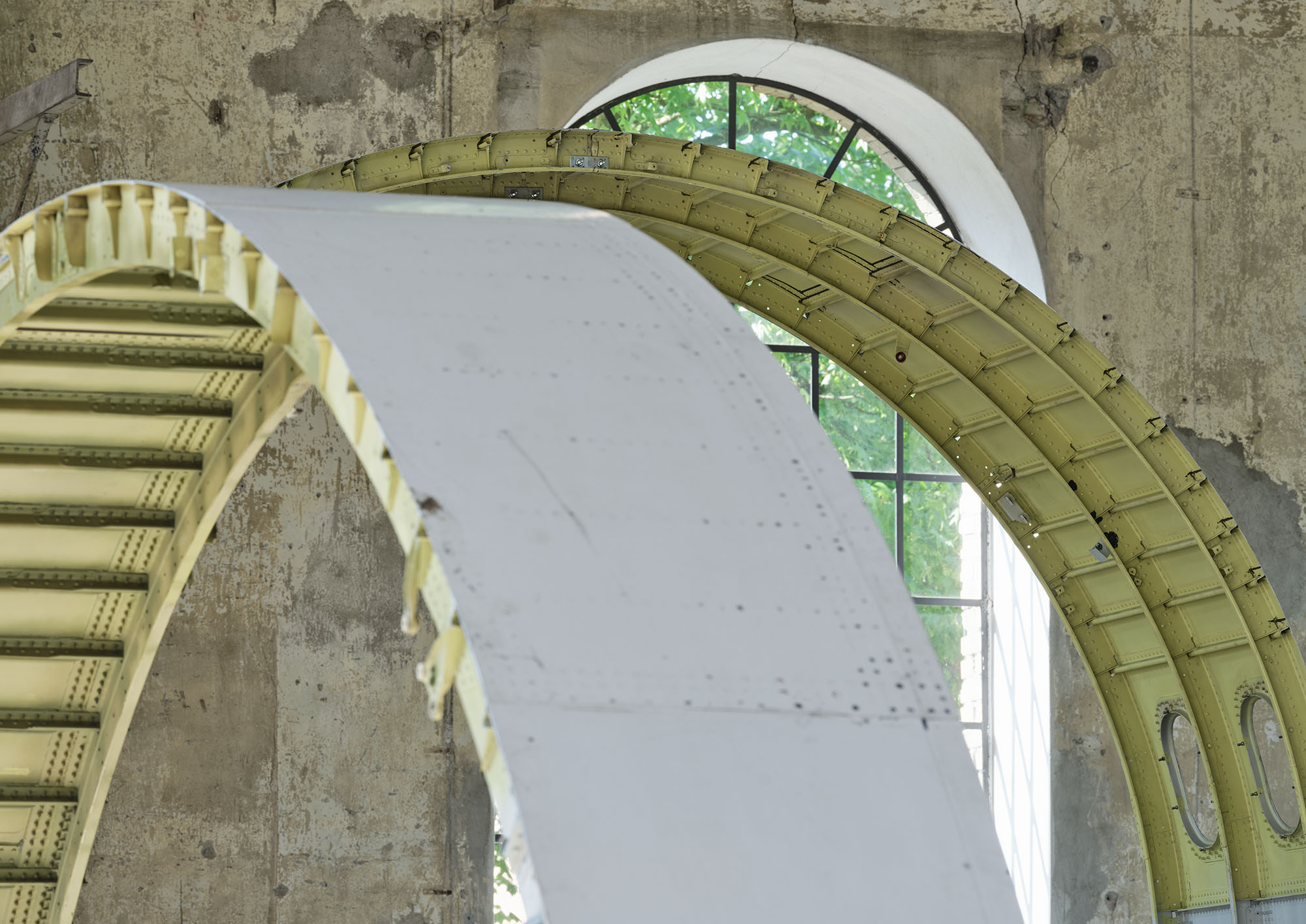
For more than twenty years, the artist has been sourcing materials such as rows of windows, outer walls and floor panels from decommissioned passenger planes, which he selects primarily from aircraft graveyards in the Mojave Desert in California and processes them in his Cologne studio. Each work begins with the readymade gesture–an industrially manufactured, authentic part is transferred into an artistic context–yet decisively transcends the gesture during the production process. Through stripping, grinding, polishing and deliberate fragmentation, the material is removed so far from its original function that its legibility as a functional object plays only a marginal role. What emerges is an abstraction that is not constructed, but uncovered.
“My interest lies in materials from aviation, but what really drives me is the search for authentic materials with a distinct history. My aim is not to highlight or expose technical progress. Rather, I am interested in alienating the material from its purpose and pointing towards a different reality.”[1] Michail Pirgelis
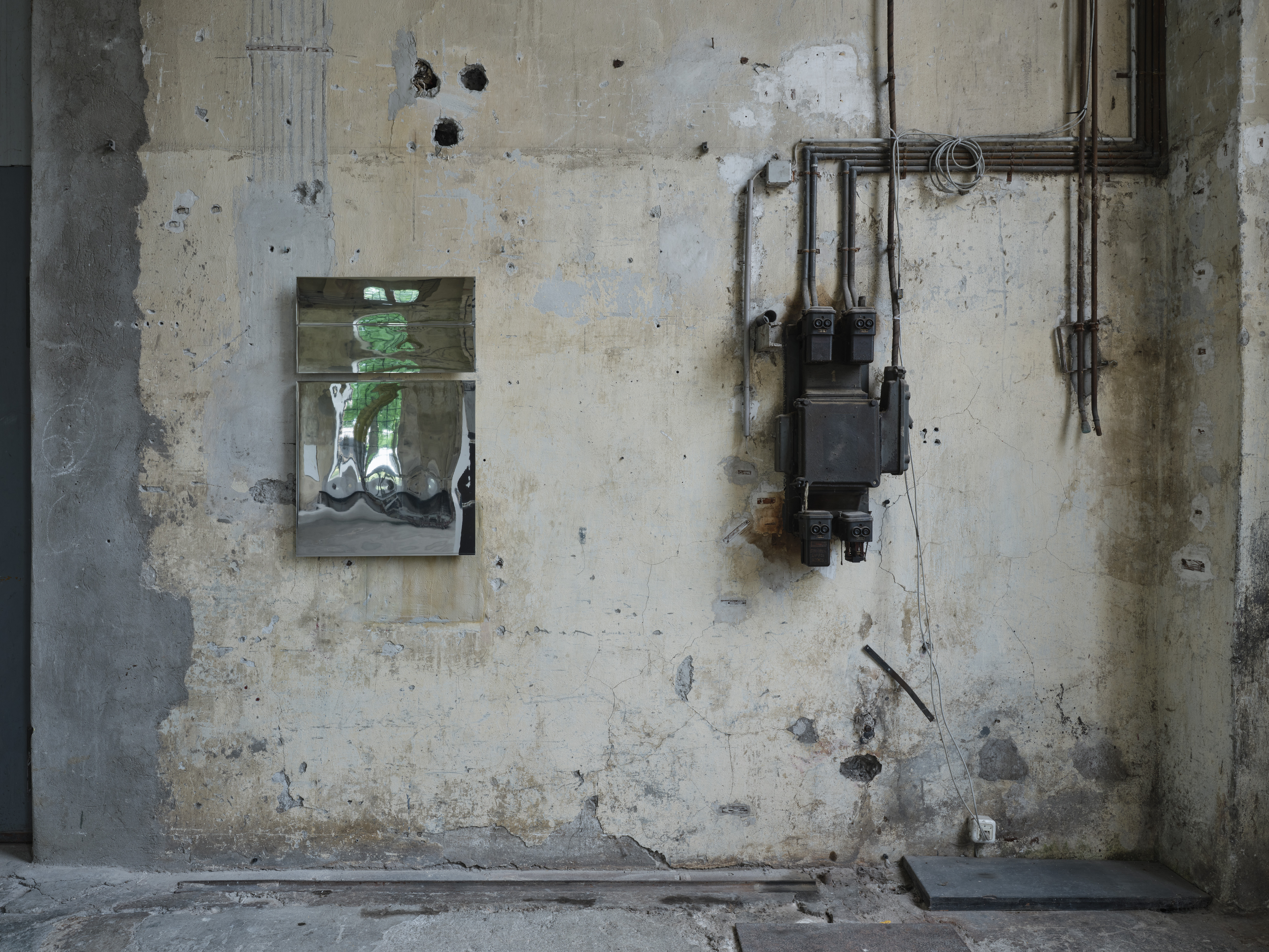
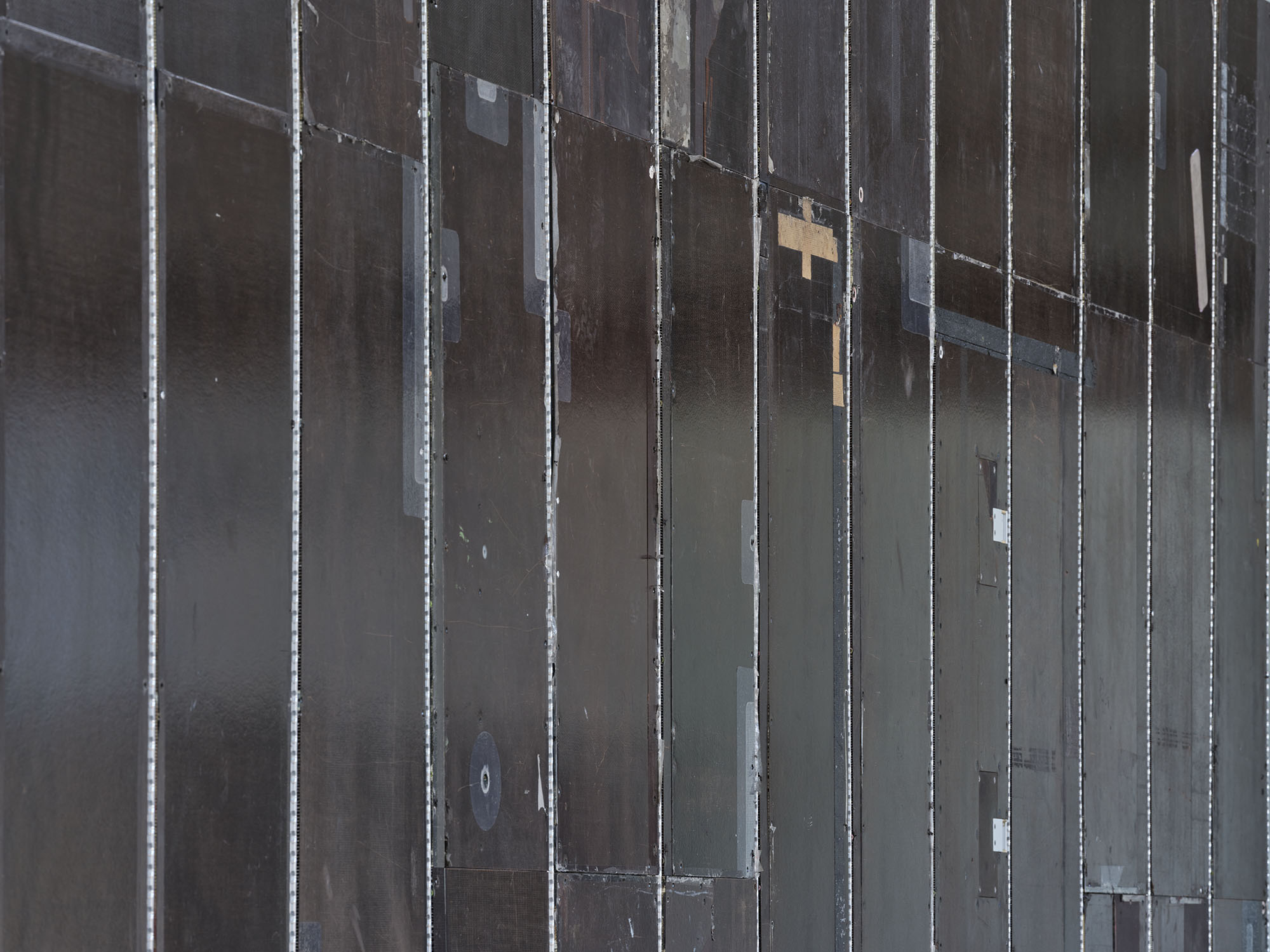
This material-based practice carries multi-layered art-historical references: alongside the mechanisms of the readymade, the sculptures reactivate conventions of Minimalism and Post-Minimalism–while simultaneously questioning them. In terms of material and form, they allude to Minimalist sculpture; yet whereas Minimalism aims for control, homogeneity and the erasure of the artist’s hand, Pirgelis counters this impulse. Surfaces are deliberately left imperfect; scratches create graphic elements, while residual traces of paint reveal gestural qualities–traces of Abstract Expressionism, which here is not an expression of subjectivity but of use and time. The material stands on the threshold between object and non-object: familiar in its materiality, alien in its meaning, no longer definable in its form.
The titles open up a whole new dimension. China Girl, No Dancing in the Aisles, Desert Star, LOST or Motor Guide–the names of the works draw on pop culture, everyday language, and collective visual memory, sometimes with an ironic undertone. China Girl– initially a song made world-famous by David Bowie in 1983–was also the nickname of a Virgin Atlantic Airbus that ended up in an aircraft graveyard. The material and its title intersect without explaining one another: a layer that reveals itself only to those who seek it. The titles don‘t fix meaning; they hold it in suspense.
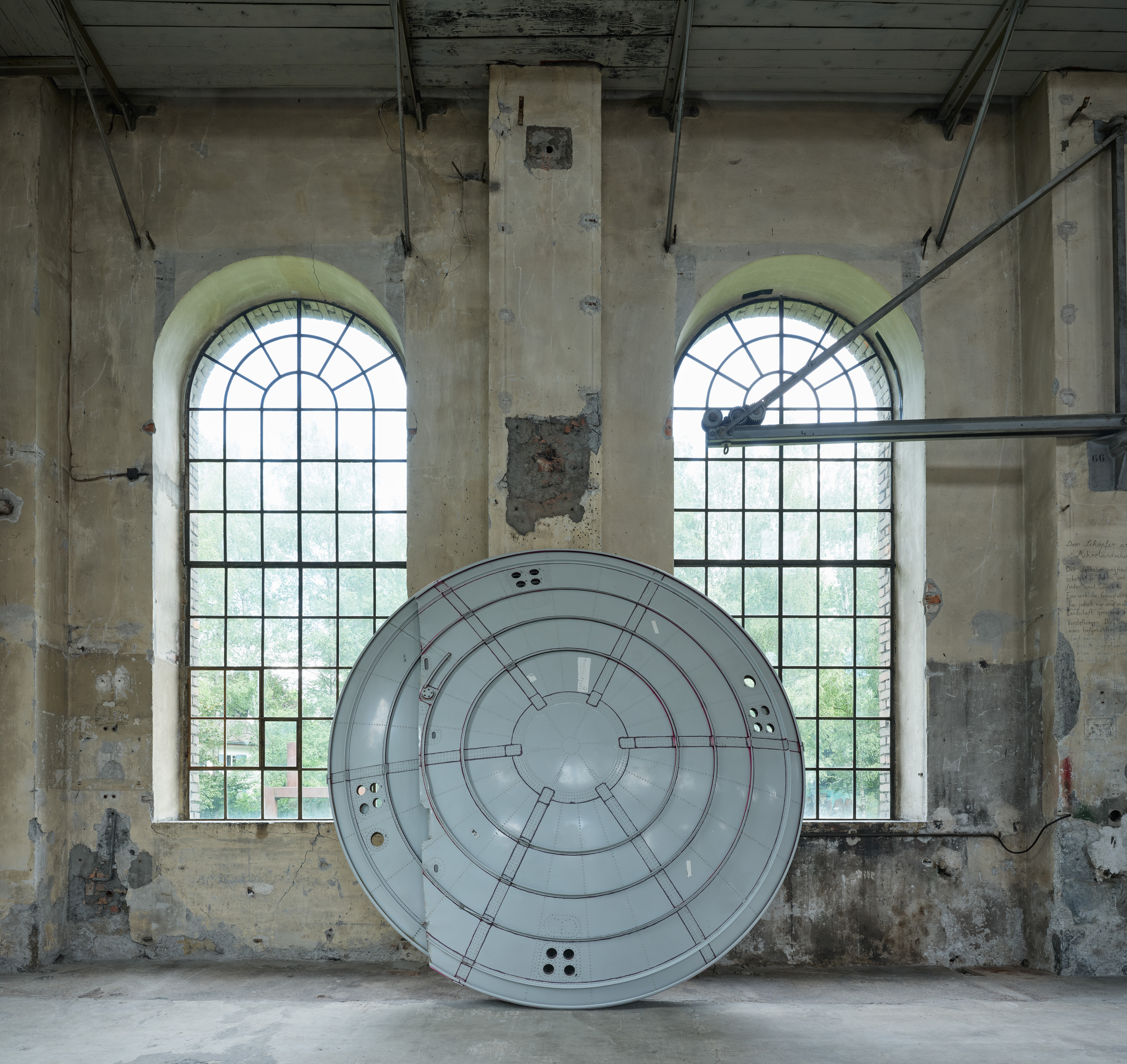
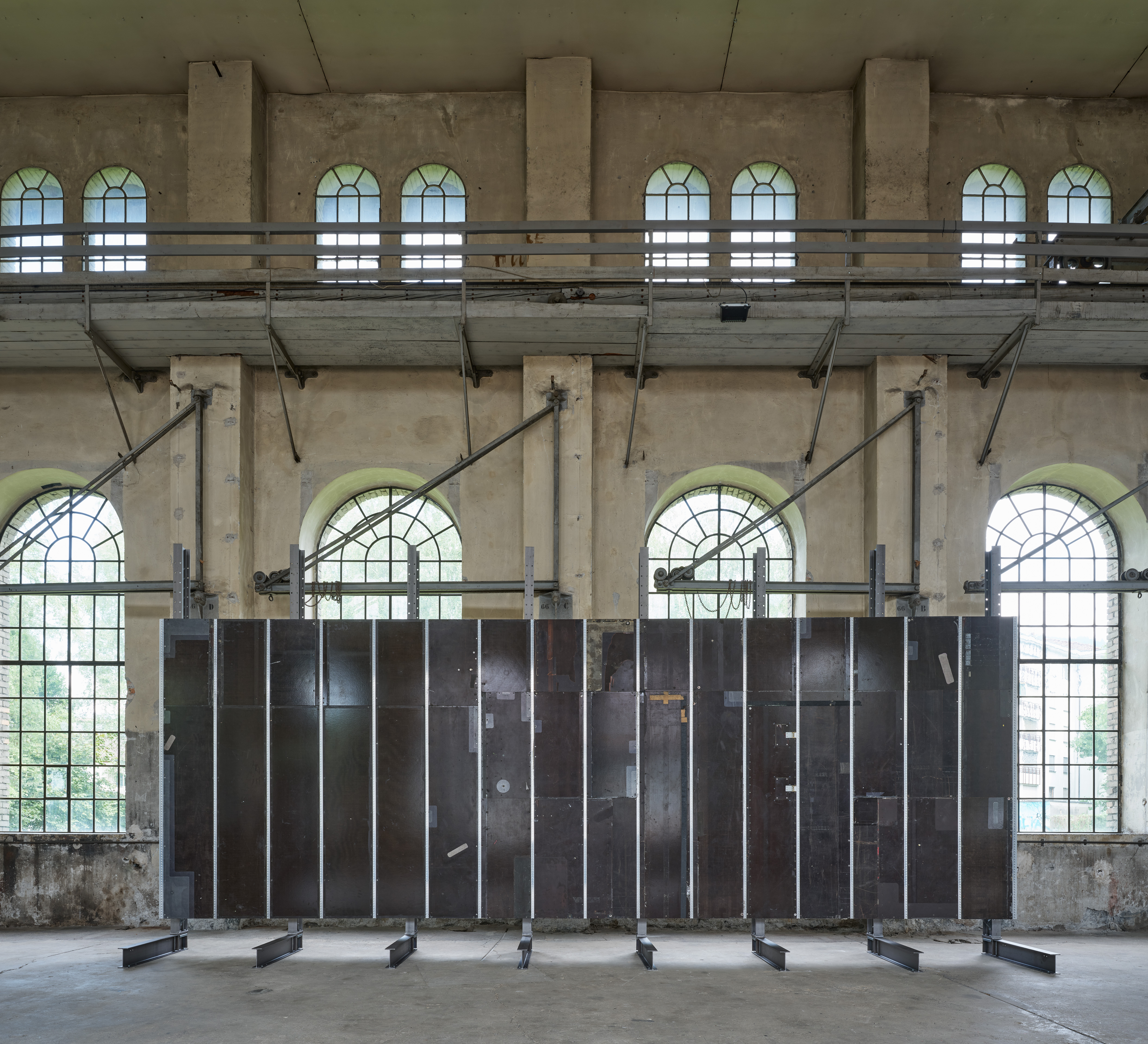
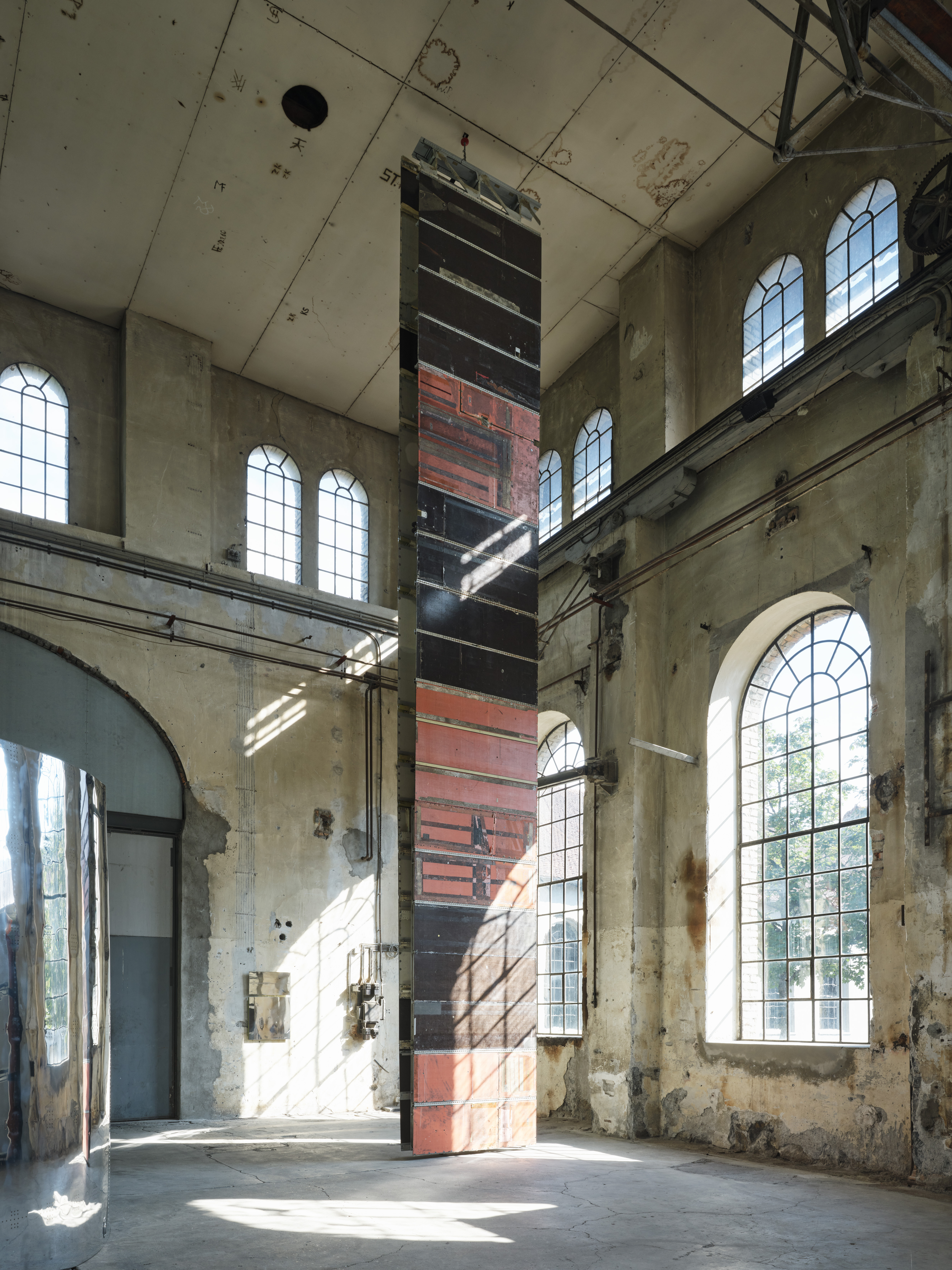
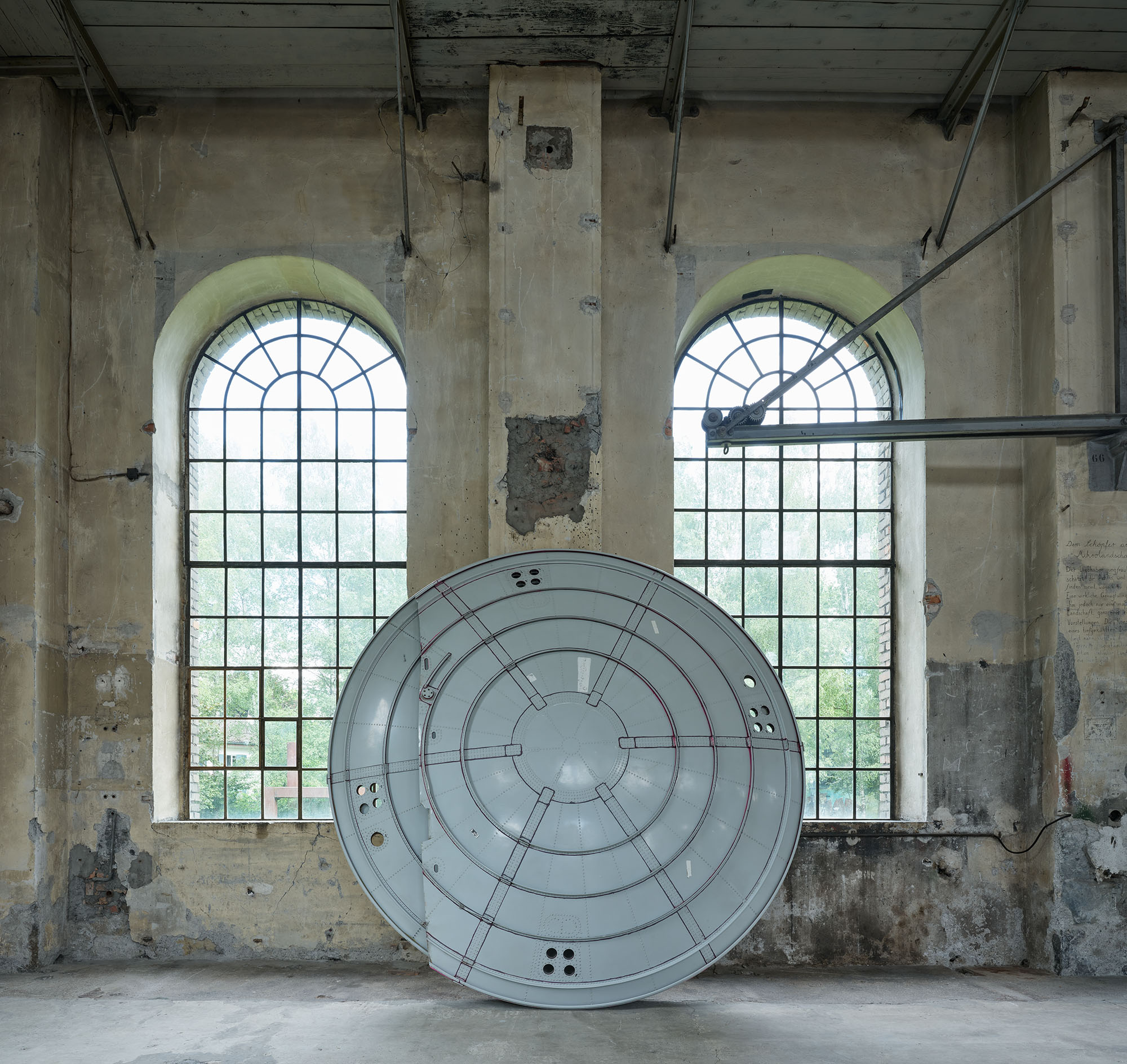
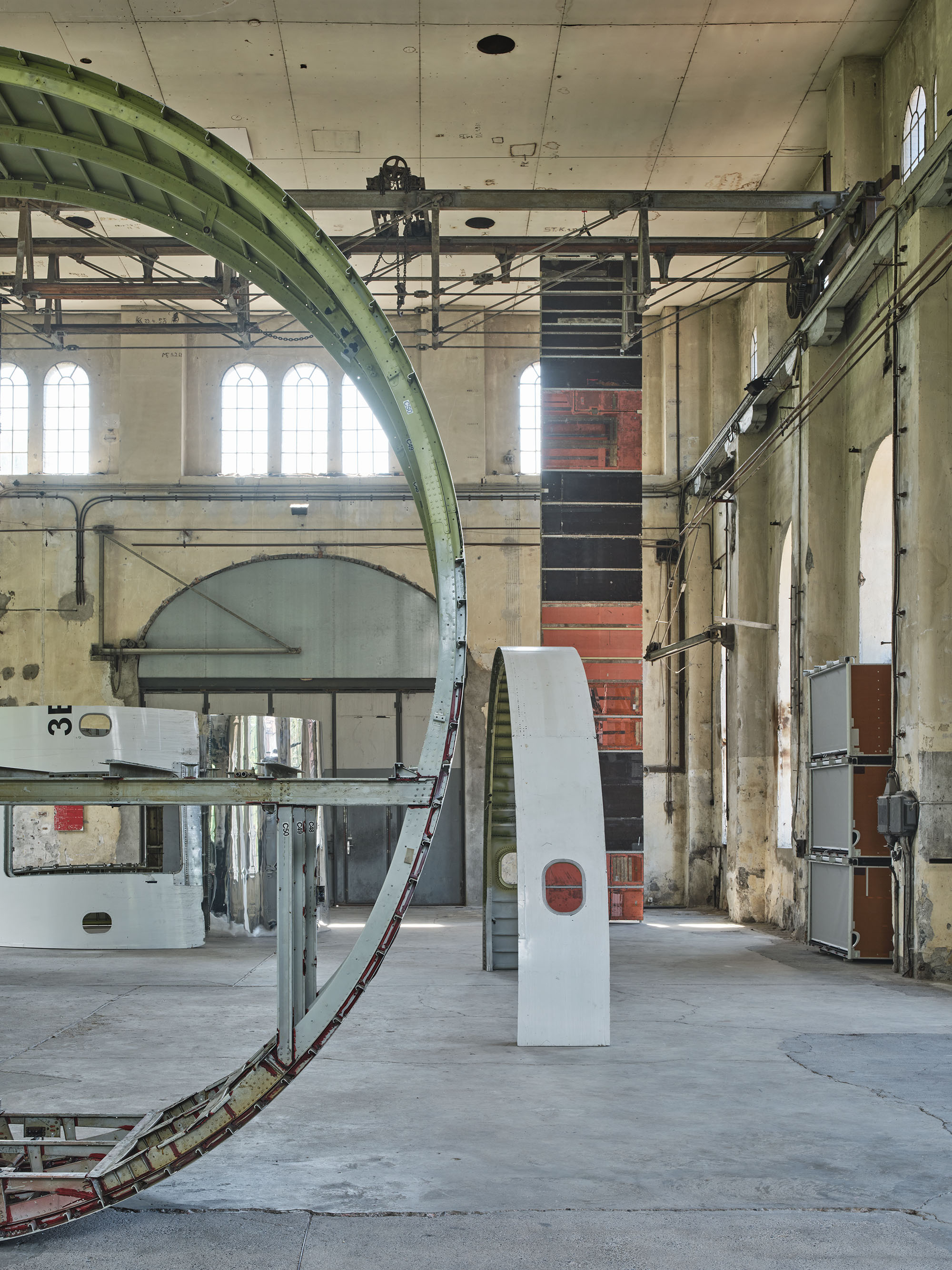
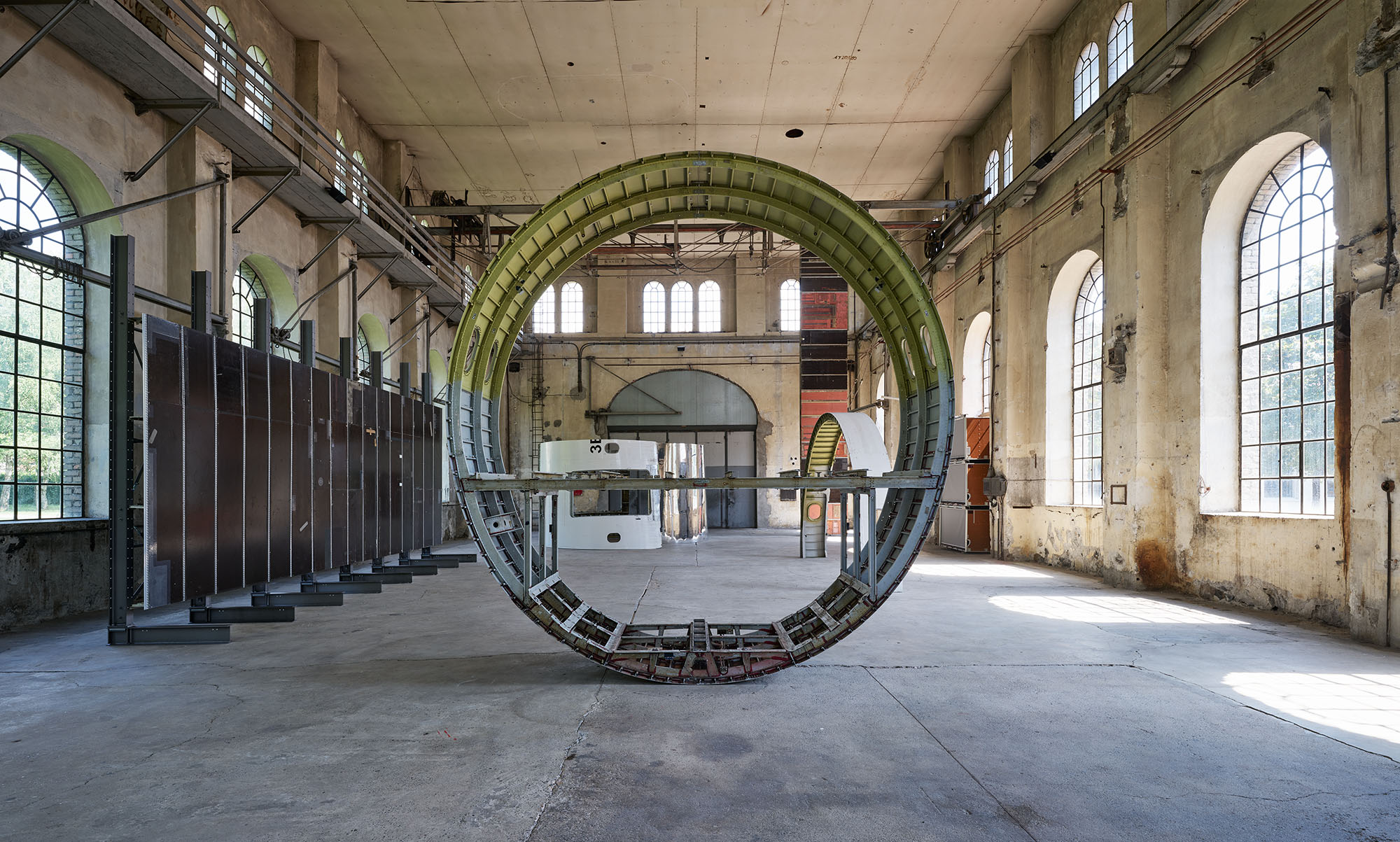
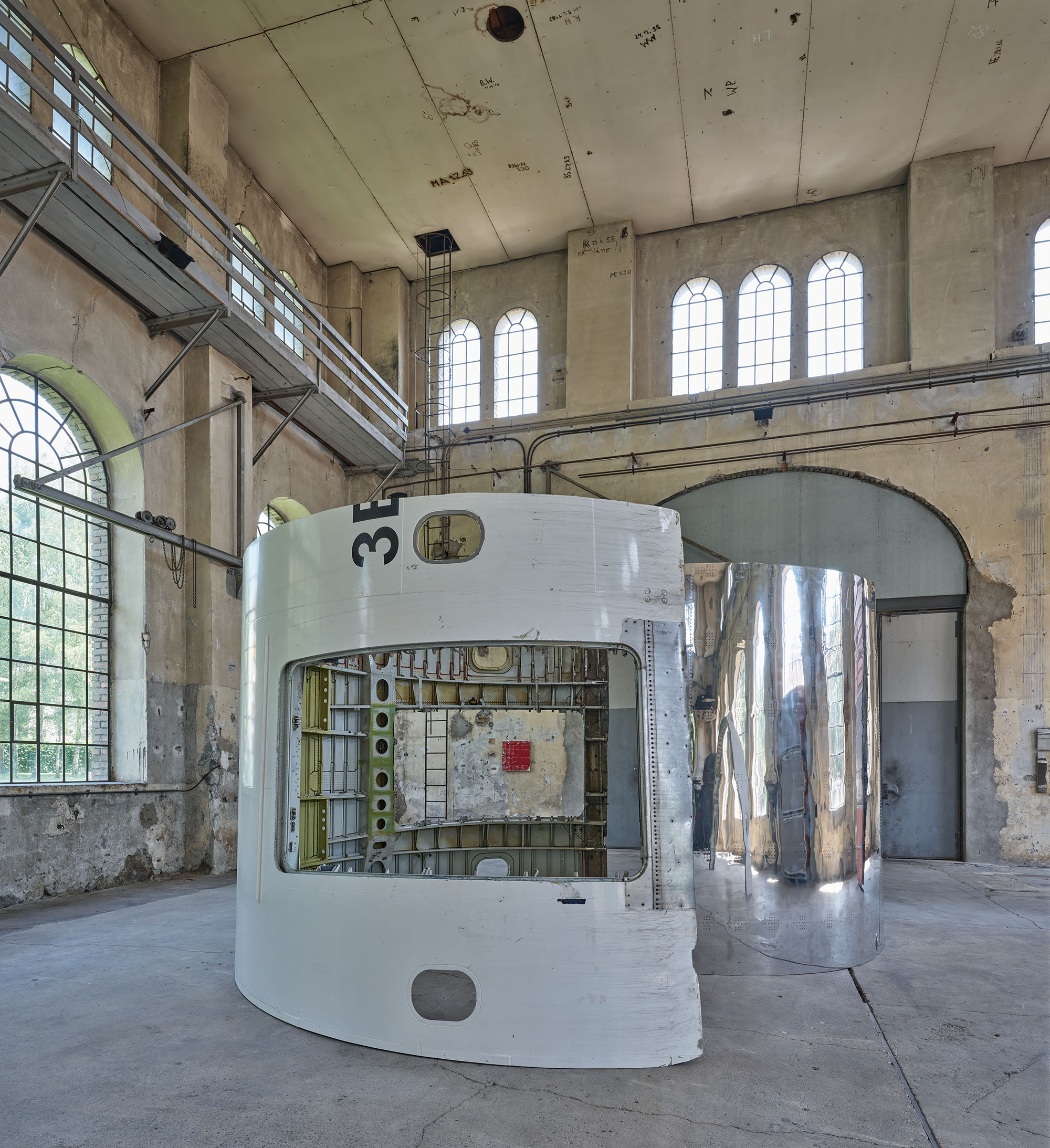
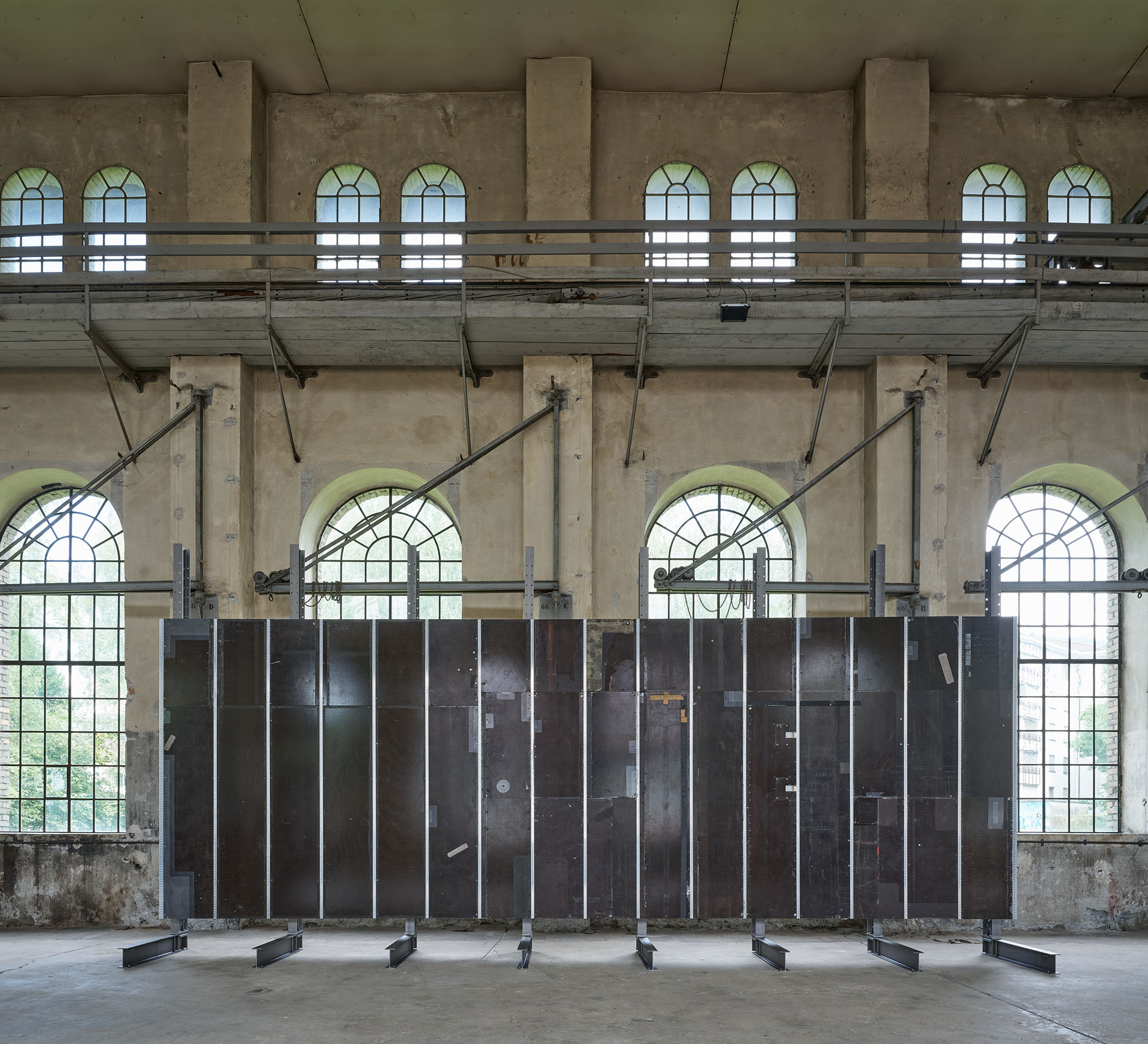
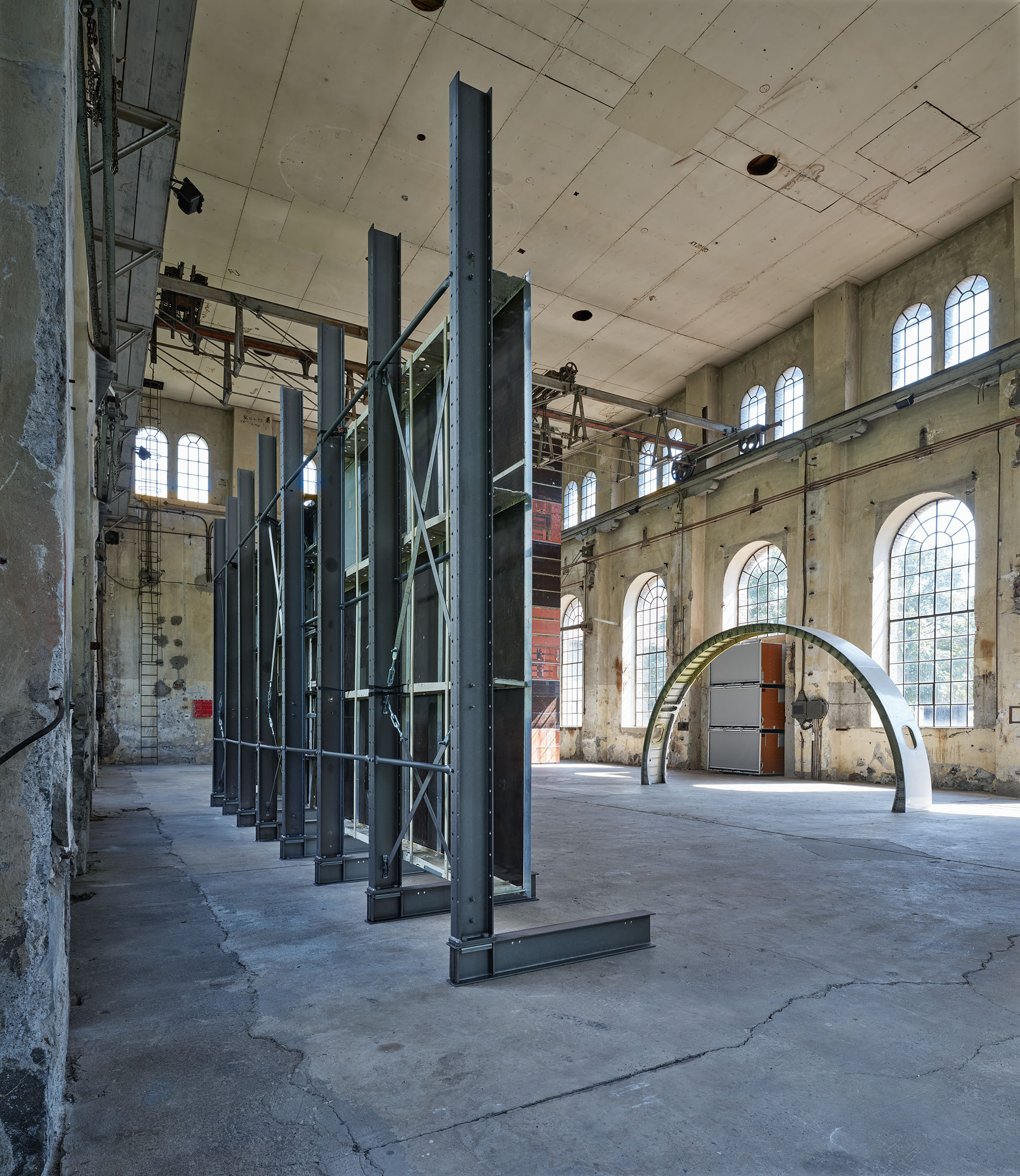
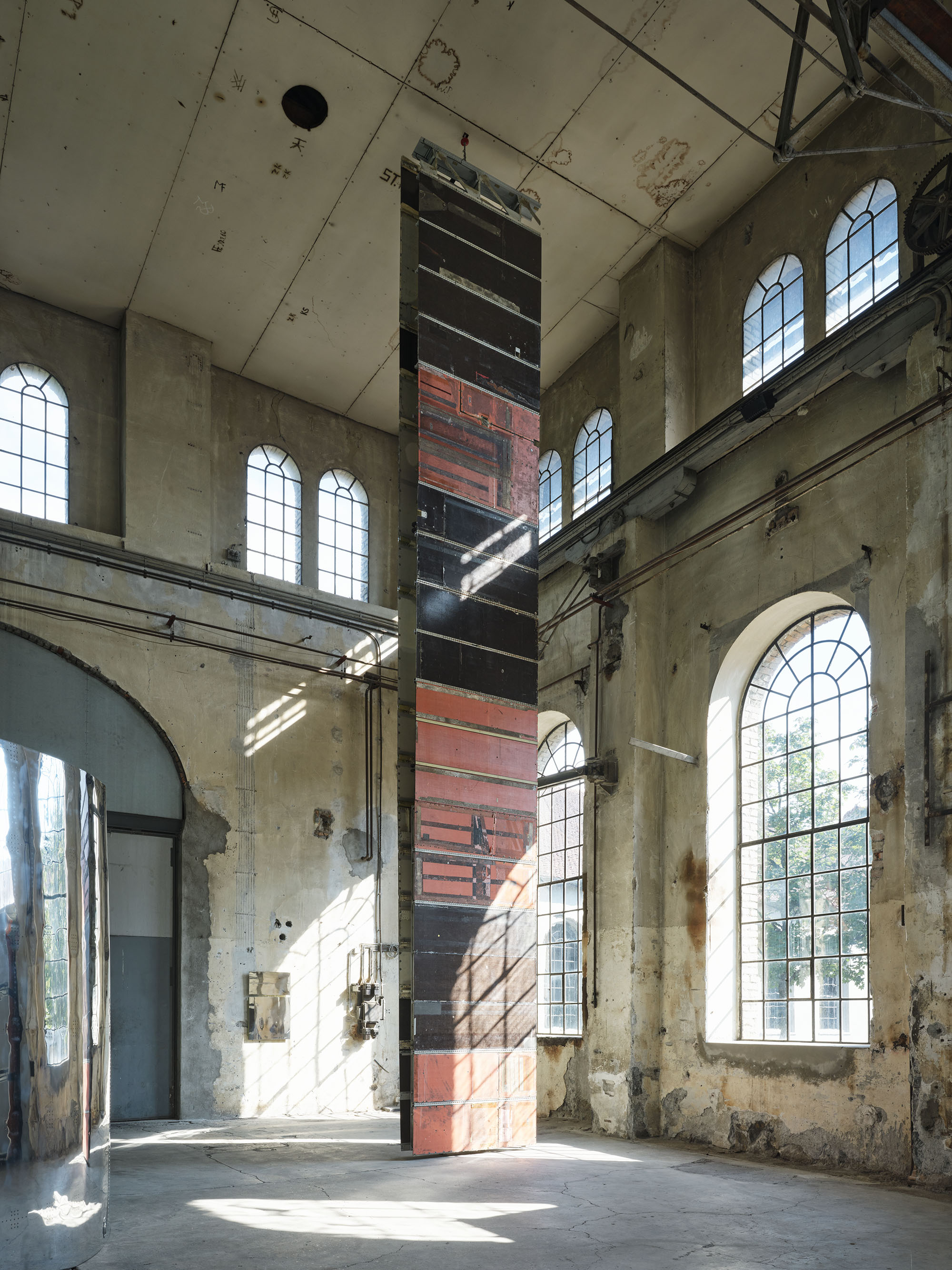
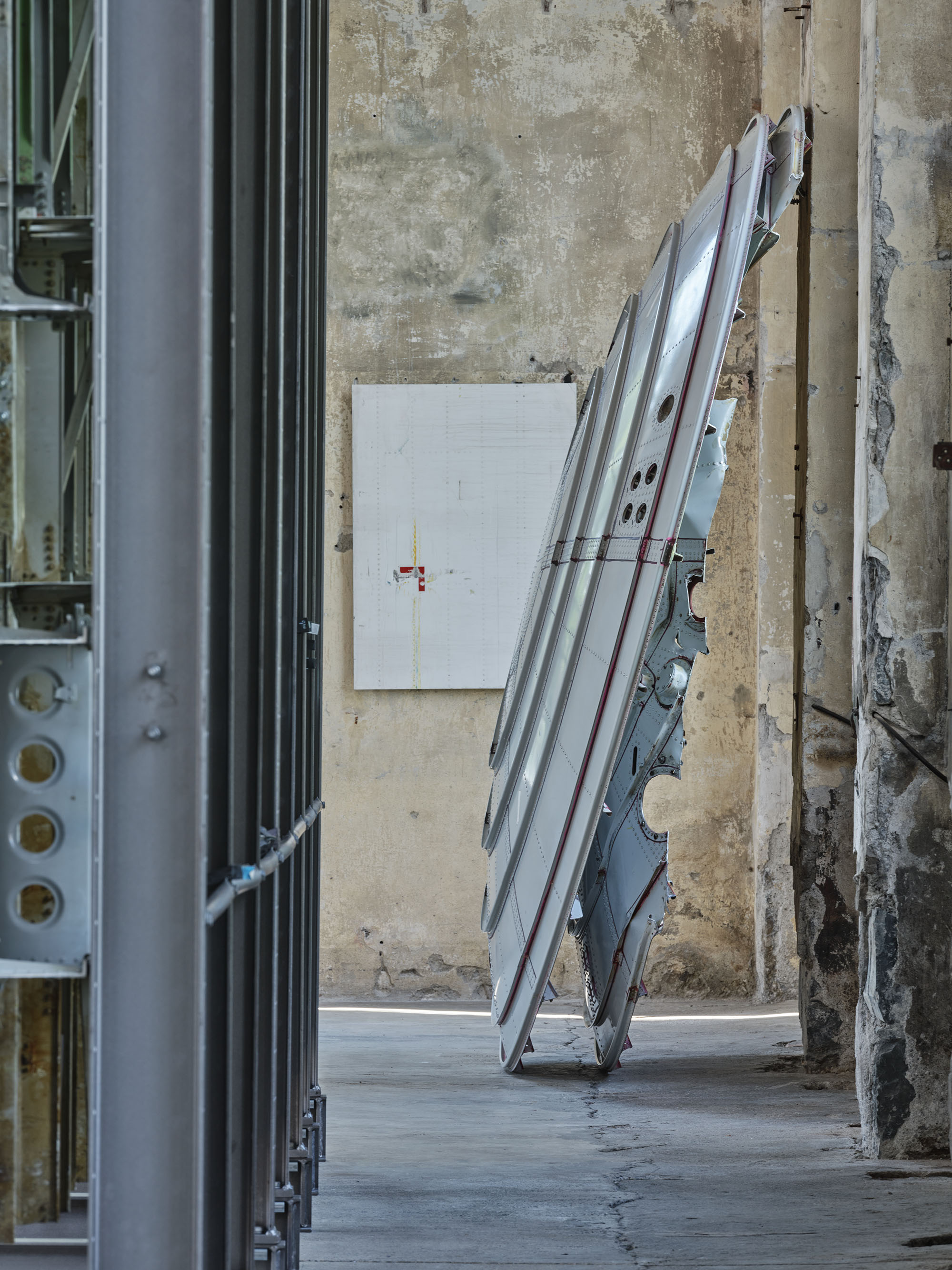
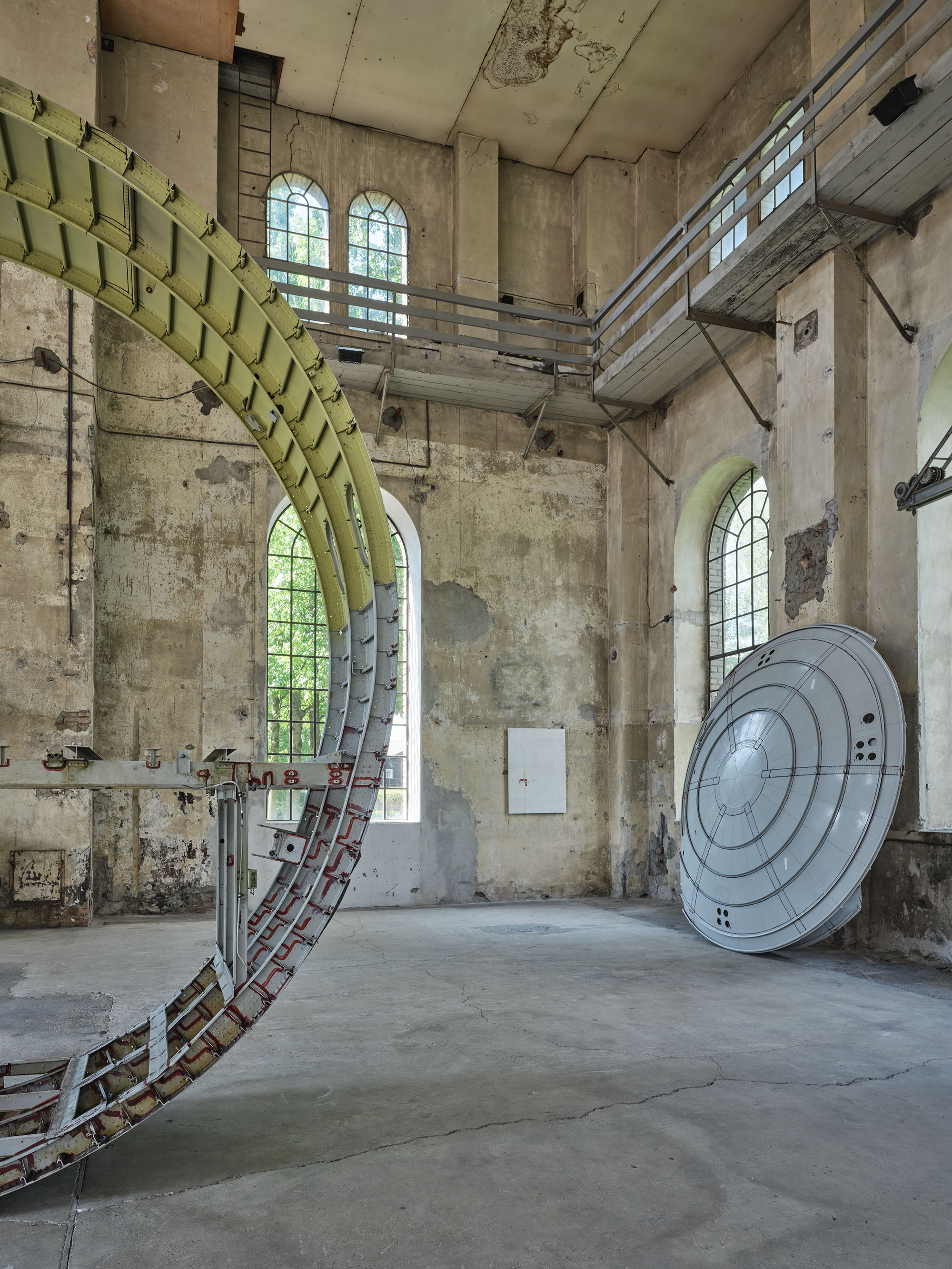
The works on display in Dornbirn give visual form to this complexity. A single motif runs through the exhibition: the round, semi-circular, arched form–variations on a cross-section dictated by the aeroplane, which Pirgelis translates into different formal registers. ECHO (2022, 308 × 490 × 290 cm) and UNIVRS (2012/2018, 305 × 556 × 62 cm) are monumental arches: ECHO occupies the space as a three-dimensional volume that defines the interior and exterior; UNIVRS extends the form horizontally–an outward gesture of reaching across. Memory Games (2017, 414 × 395 × 120 cm) and LOST (2022, 338 × 338 × 80 cm) counter this in different ways with the closed nature of the circular form: no opening, no passage–the form turns in on itself. The large-format, horizontally oriented works such as Desert Star I and II (both 2022) play a complementary role. They counter the circular movement with the tranquillity of panels of the same format–a serial logic that refers to monochrome visual fields.
The positioning of the sculptures in the assembly hall allows this complexity to be experienced in space, linking the material history of the works with the industrial history of the building. Both tell a story of use, wear and tear, and transformation. Yet hyle means more than just raw material; it also signifies potential, the state of the as-yet-undecided. Pirgelis’s sculptures never fully forsake this state: they are formed but not finished; legible but indefinable. HYLE, the exhibition title, is therefore not a retrospective on the source material, but a description of a state that extends to the viewer’s act of reception: the work remains in motion as long as it is being viewed.
[1] “Im Gespräch” (In Conversation) in “David Ostrowski Michail Pirgelis. To lose”, exhibition catalogue, Leopold-Hoesch-Museum & Papiermuseum Düren (Cologne: Verlag der Buchhandlung Walther König, 2016), 130.
Michail Pirgelis was born in Essen in 1976, grew up in Greece, and now lives and works in Cologne. His works have been shown in numerous solo exhibitions, including at Kunstraum Munich (2026); Fuhrwerkswaage, Cologne, and Odyssey, Cologne (both 2022); Braunsfelder, Cologne (2019, with Ruth Wolf-Rehfeldt); Leopold-Hoesch-Museum, Düren (2016, with David Ostrowski); Autocenter Berlin (2015); and Artothek, Cologne (2011). Selected group exhibitions include Haus N, Athens and Cloud Seven, Brussels (both 2026); Wilhelm Hallen, Berlin (2022); byvier, Cologne (2021); Ludwig Forum, Aachen, and Gewölbe, Cologne (both 2020); DuMont Kunsthalle, Cologne, Kunsthalle Nürnberg, Haus N, Athens, and Riot, Ghent (all 2019); Sculpture in the City, London (2018–19), Athens Biennale; Kunstverein Reutlingen, and Marta Herford (all 2018); Rubell Family Collection, Miami (2015); Istanbul Modern (2014); Bundeskunsthalle Bonn (2013); Museum Morsbroich, Leverkusen (2012); Thessaloniki Biennale (2011); Kunstmuseum Bonn (2010); and Stadtmuseum Düsseldorf (2005). Among the awards and scholarships he has received are the Berlin Scholarship from the Academy of Arts, Berlin (2013), the Audi Art Award for “New Positions” at Art Cologne (2010), the Adolf Loos Prize from the van den Valentyn Foundation, Cologne (as its first ever recipient, 2008) and the Villa Romana Prize, Florence (2007).
You can download the press release here.
The press photos are available for download further down on this page.
Please download the image credits and reproduction terms here.
The image files are available to you in the context of announcing and reporting on the exhibition by Michail Pirgelis at Kunstraum Dornbirn (3 July – 8 Nov 2026).
Reproductions must be accompanied by the name of the artist, the title and date of the work, the copyright and, where indicated, the name of the photographer.
Please note here the specifications accompanying the respective caption. Reproductions may not be cropped, overprinted, toned or treated derogatively in any way, or used for marketing or promotional purposes without prior permission from the copyright holder.
The use of a single image to illustrate a double page is not permitted without prior authorisation.
The use of images for front covers may attract a fee and will require the prior authorisation of the owner of the work.
Please don’t hesitate to contact us if you have any questions regarding the context, usage or content of the images: Sina Wagner, sina.wagner@kunstraumdornbirn.at.