Sylvie Fleury
ÎÔ
28 June — 13 October 2019


The artist Sylvie Fleury, who was born in Geneva, has been causing a stir on the international art scene as a ‘fashion girl’ since the early nineties. She puts luxury objects and consumer products on stage, places them in new contexts and confronts the viewer with questions about the power of status symbols that have become fetishes of consumption. At first glance, her works seem like a confirmation of the value dictates of our consumer society, but on closer look they turn out to be a subtle and critical commentary on them.
‘The work of Sylvie Fleury takes up the world of luxury and commodities and dissolves the hierarchies between art, culture, design, fashion and commerce. As an assistant to the artist John Armleder, she came to art by chance in 1990 and has ever since been presenting the objects of desire from the realms of fashion and
cosmetics as sculptures and installations. Shopping bags of well known fashion companies and broken make-up products are staged in exhibition spaces. Status symbols and fetishes of the consumer world are shifted into the context of art and thus questioned in their value. Fleury’s objects are ready-mades in Duchamp’s sense and cite Andy Warhol’s approach to criticizing the commodity world. Neon signs proclaim the power of the brand and make the logo a sign of a global consumer world. Fleury’s works range between seduction and superficiality, art and advertising, concept and consumption.‘1
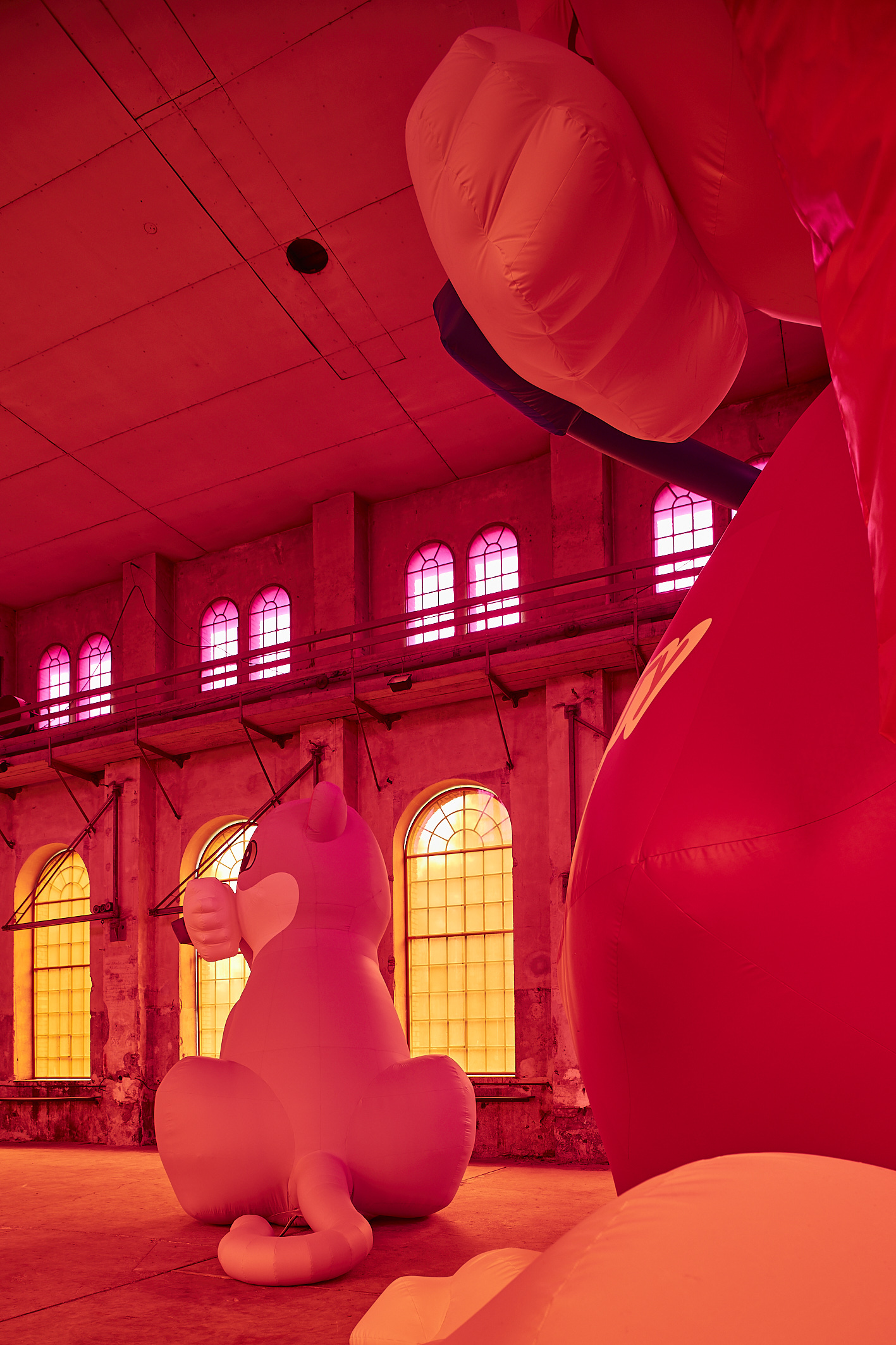
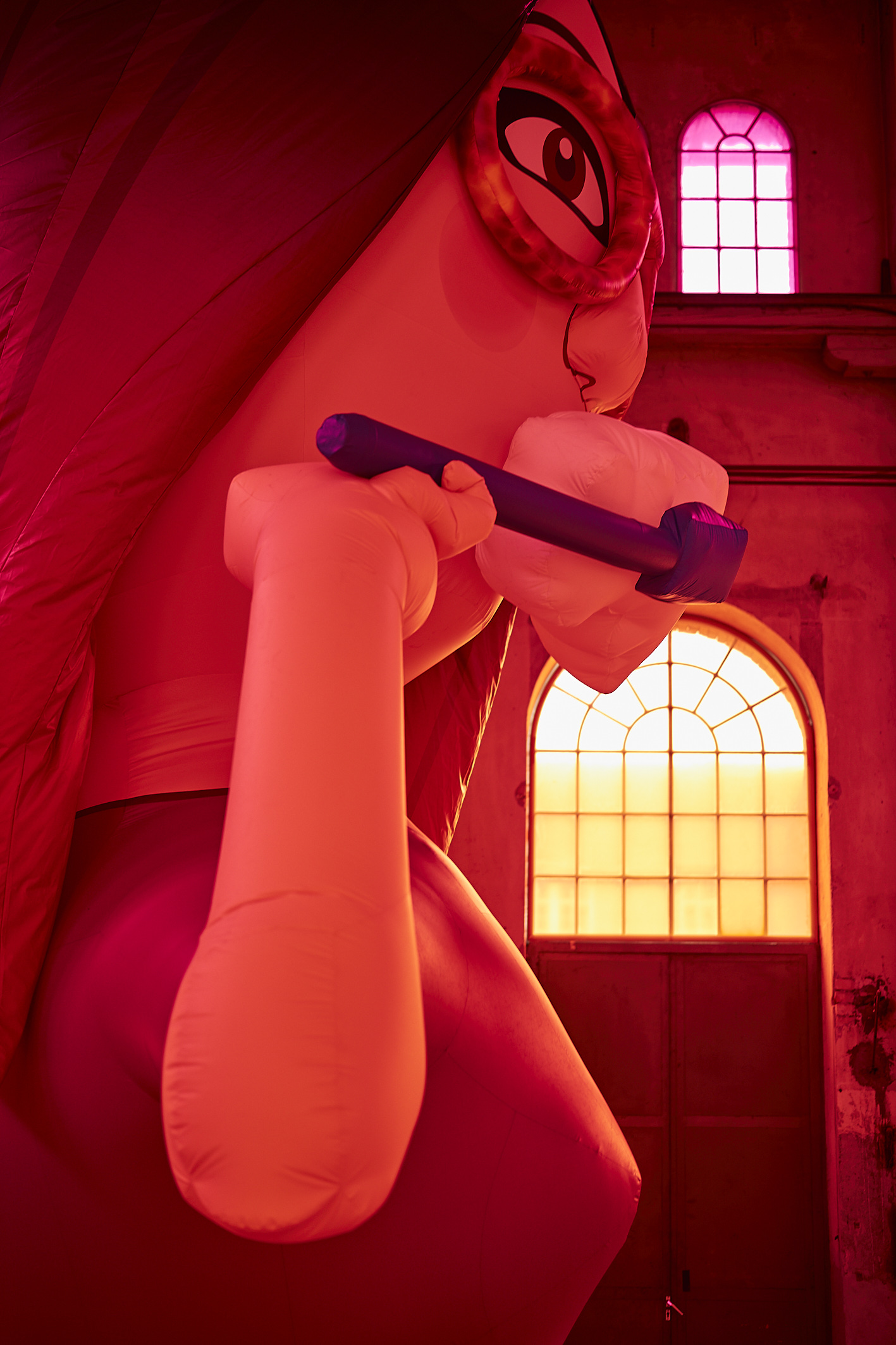
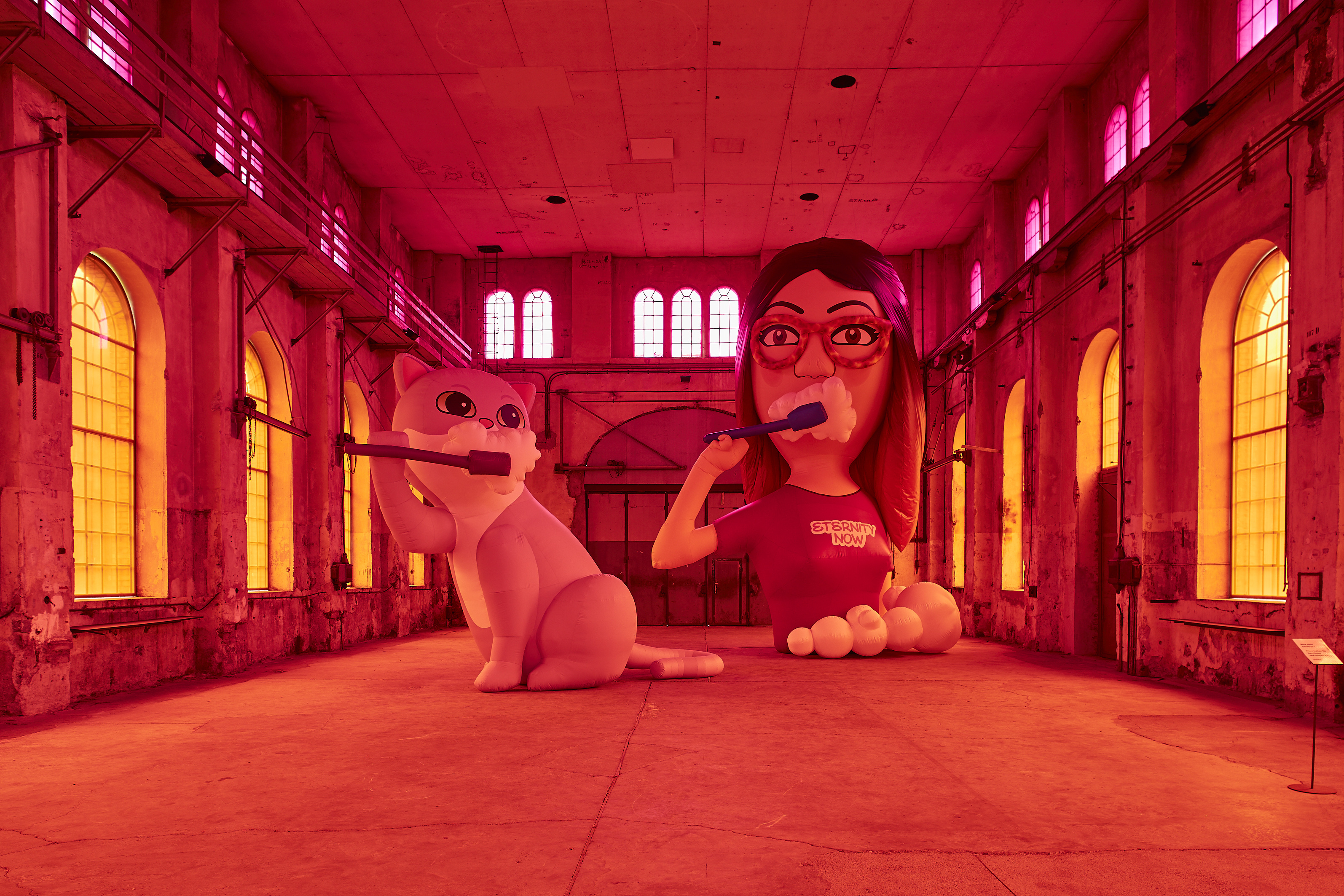
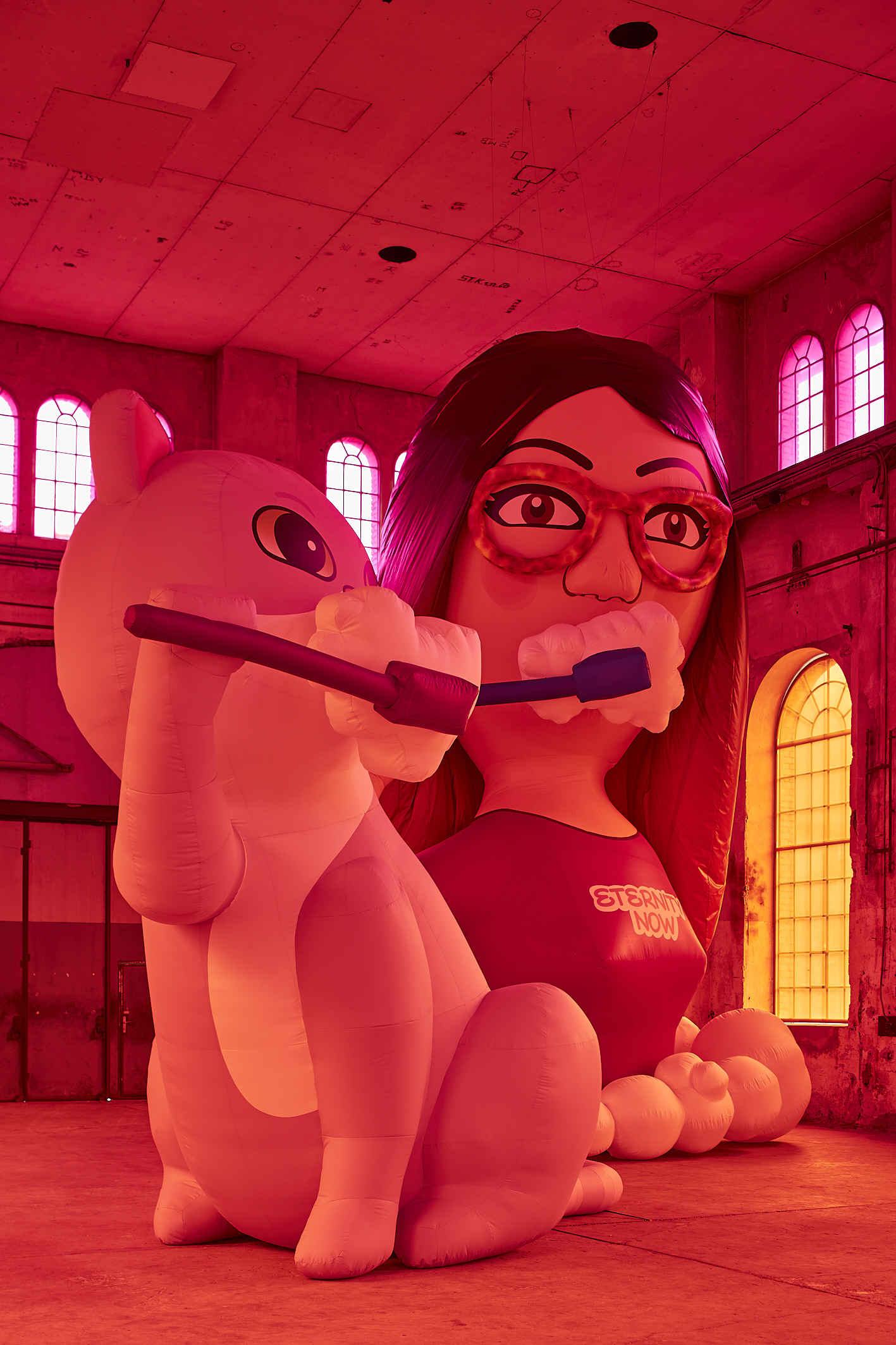
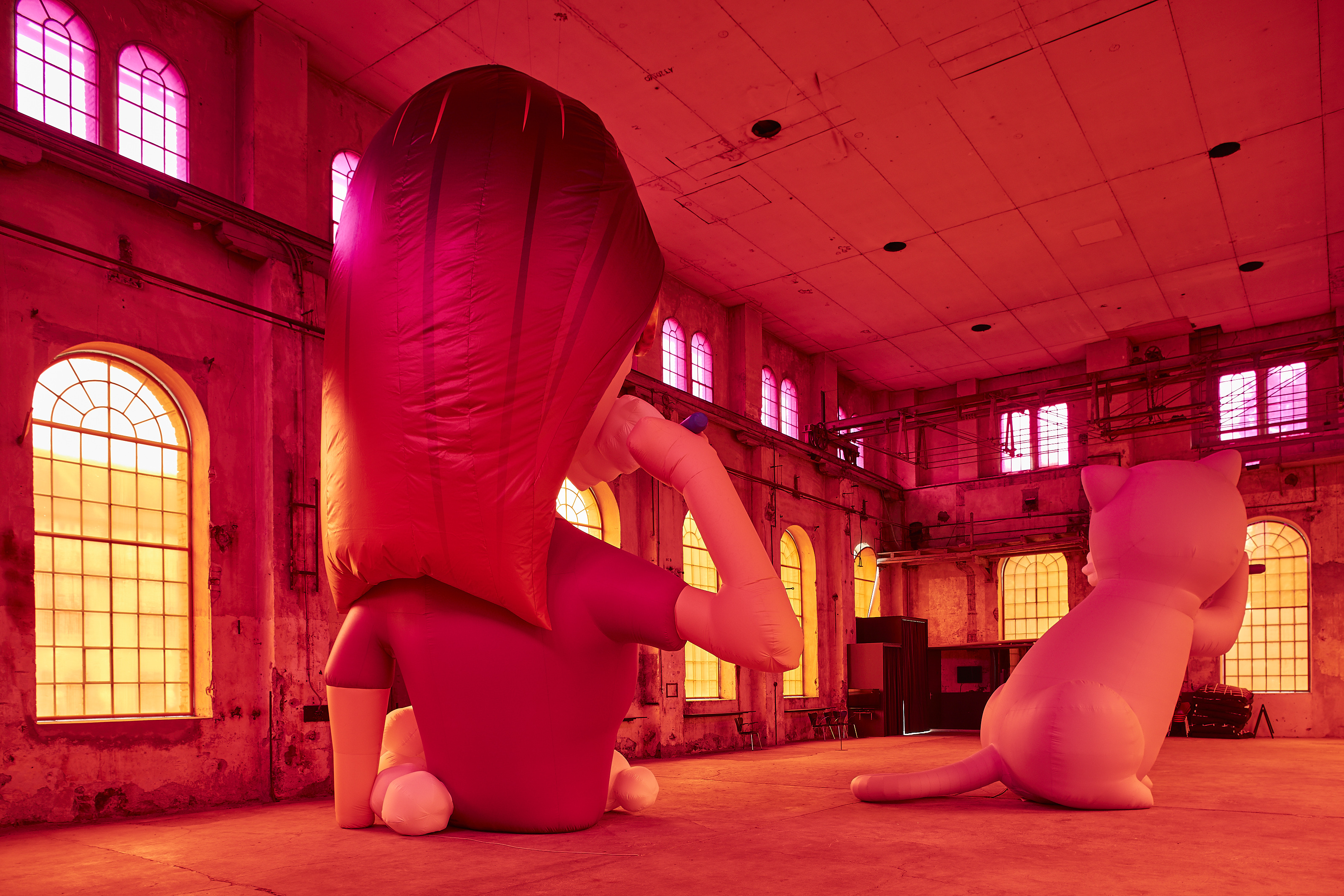
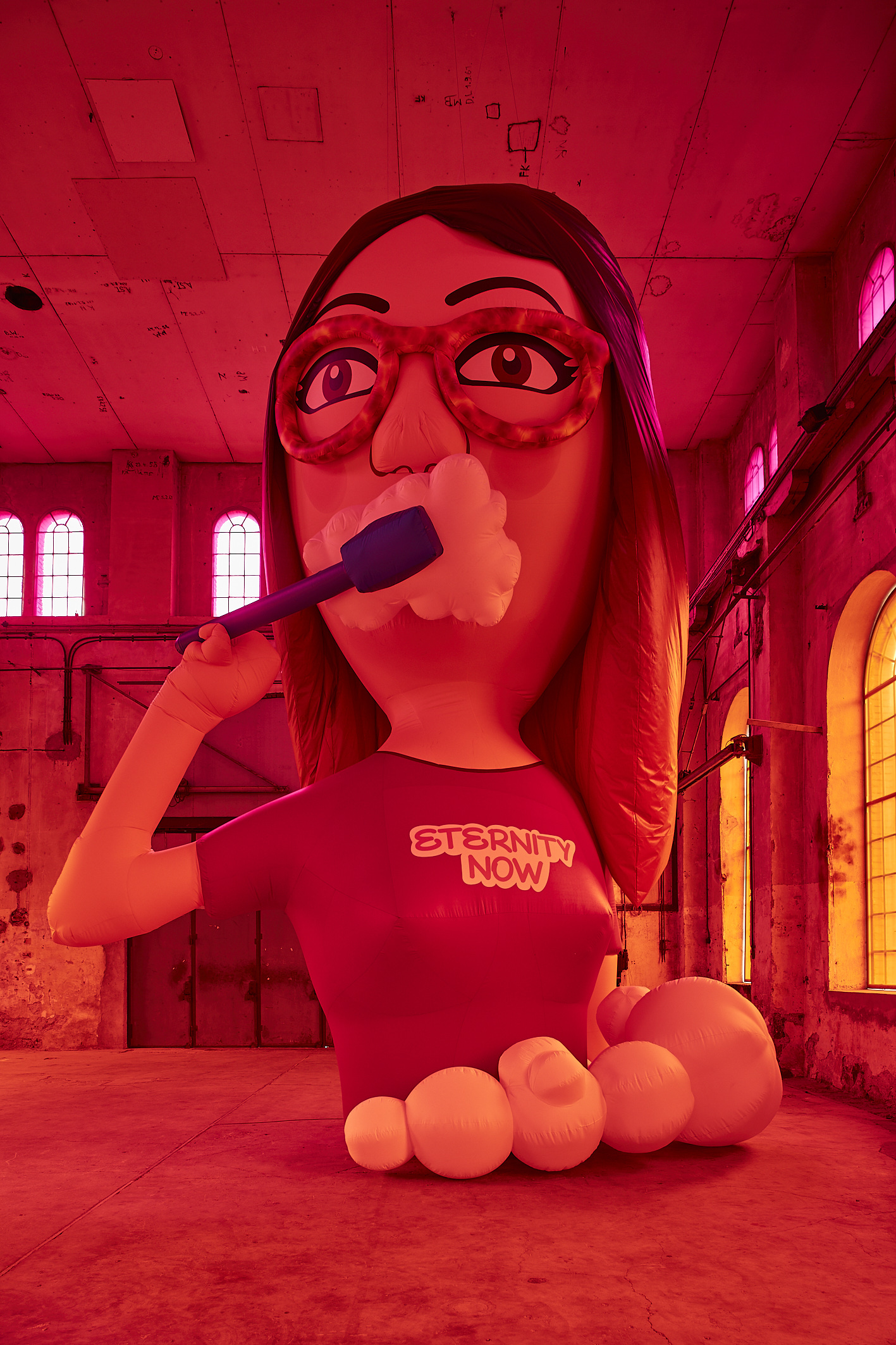
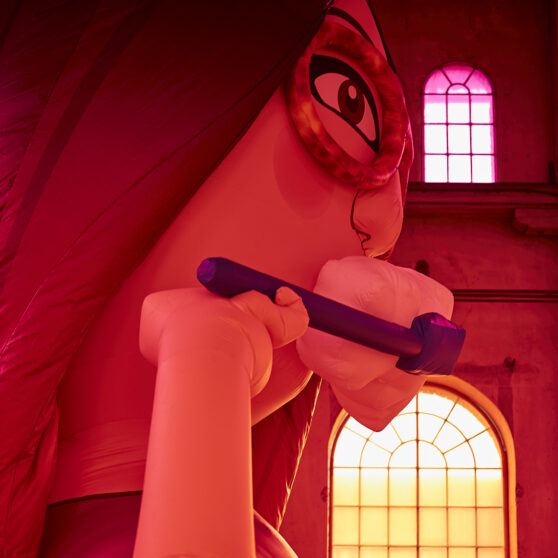
For the exhibition at Kunstraum Dornbirn, Fleury has developed an extravagant, new series of space-filling objects of gigantic dimensions. The title refers to the Italian expression ‘ÎÔ’, in English ‘I’. The inflatable sculpture represents an unusual form of self portrait. Next to a bust of the artist, her cat is positioned in the form of an enormous inflatable figure. With the help of the smartphone app Memoji, Fleury creates simultaneously simple and enigmatic images, whose extreme distension and intense colourfulness symbolise our relationship to our own ego in the ambivalent context of public perception through social media platforms and individual look.
1 Distanz Verlag, Michael Buhrs, Verena Hein, 2016
Curator: Thomas Häusle